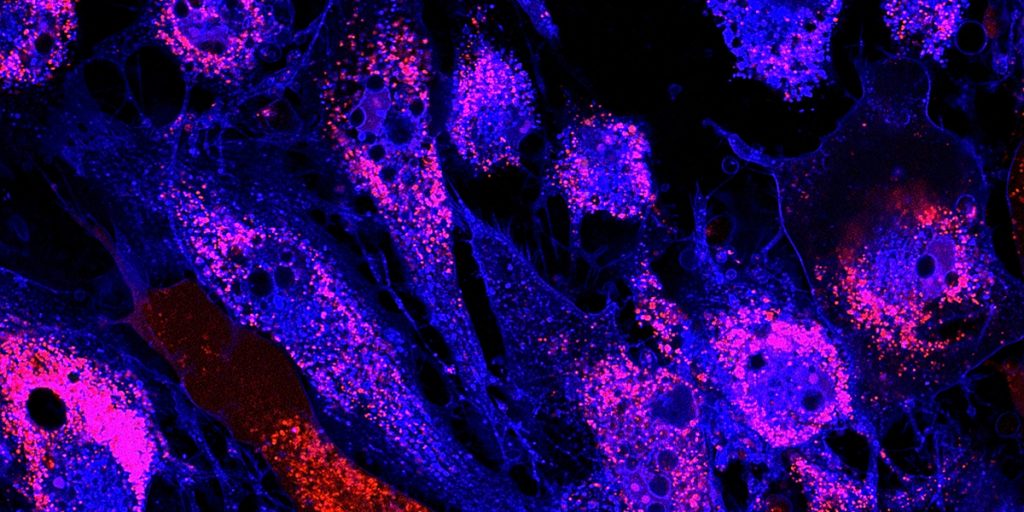
MSCs are a class of multipotent cells found in human tissues, such as bone marrow, adipose tissue, dental pulp, and periosteum, a layer of connective tissue that envelops the bones. They are also known as: Mesenchymal Stem Cells, Medicinal Signaling Cells, Mesenchymal Stromal Cells, and Marrow Stromal Cells. [Read more…]
Cord Blood Banking Industry – Key Benchmarks to Track & Why to Care

The “Global Cord Blood & Tissue Banking Industry Report – Market Size, Segmentation, and Forecasts” market report reveals key benchmarks to track and why you should care. Benchmarks are critical to assess, because the cord blood banking industry has matured substantially over the past few years, creating both serious threats and novel opportunities.
Therefore, judging individual company performance relative to the broader cord blood marketplace has become substantially more complex.
[Read more…]
Can New Manufacturing Platform Reduce “Sky High” Costs of Stem Cell Therapies?

The LA Times released a compelling article highlighting the mounting evidence that stem cell treatments will be some of the highest priced treatments within the medical marketplace. Titled “Sky-high price of new stem cell therapies is a growing concern,” the author Michael Hiltzik explores the often exorbitant costs associated with stem cell procedures.
In a powerful statement that summarizes the author’s position, he writes, “The evidence is already mounting that stem cell and other advanced biologic treatments will be among the most expensive therapies in the medical arsenal.” As examples of expensive cell therapy procedures, Hiltzik cites that Prochymal, a mesenchymal stem cell treatment approved in Canada, can costs as much as $200K, while Provenge, a cell-based vaccine for prostate cancer, can cost nearly $100K to extend a patient’s life by a few months. [Read more…]
Mesenchymal Stem Cells in 2026: Therapies, Trends, and Transformations
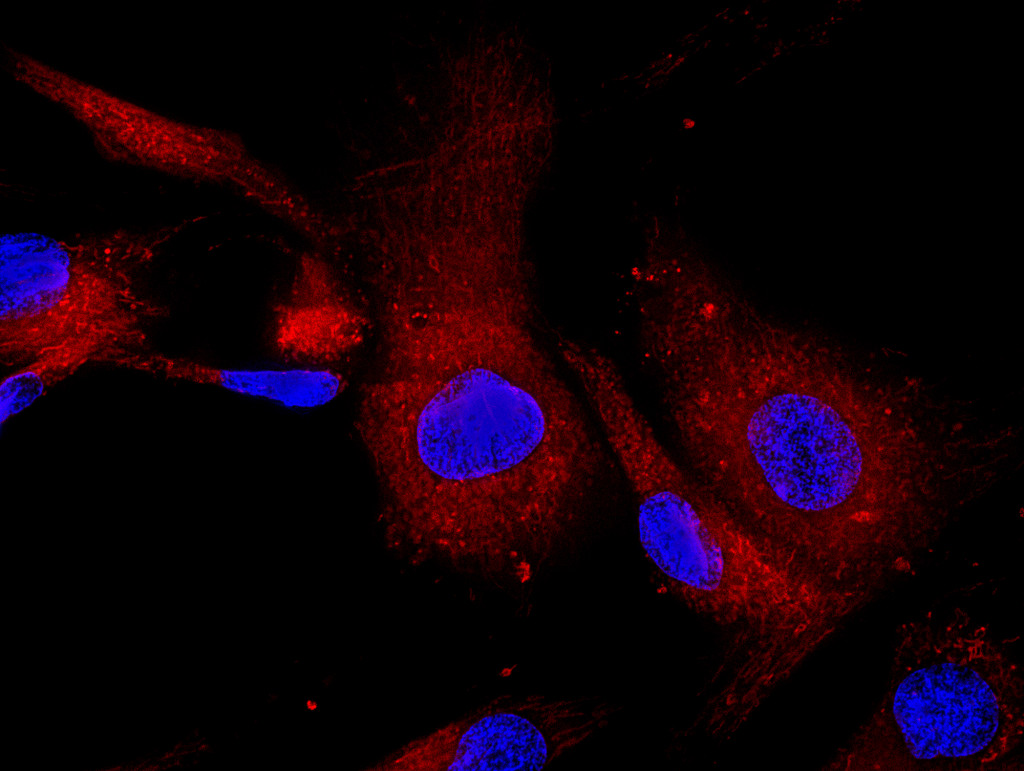
Mesenchymal stem cells (MSCs) are multipotent stromal cells capable of differentiating into osteoblasts, chondrocytes, myocytes, adipocytes, pancreatic beta cells, and potentially other cell types. MSCs continue to attract significant therapeutic interest due to their ability to address a wide spectrum of acute, chronic, and degenerative conditions, including orthopedic injuries, autoimmune diseases, cardiovascular disorders, and metabolic syndromes.
Advantages of MSCs in Therapy
MSCs remain highly advantageous over other stem cell types for several reasons. They avoid the ethical challenges associated with embryonic stem cells, demonstrate immuno-privileged properties that reduce risks of rejection, and enable both autologous and allogeneic transplantation. Advances in autologous MSC therapy have enabled the regeneration of cartilage, meniscus, tendons, and bone, with ongoing research into their potential for cardiac, neural, and liver tissue repair.
Recent innovations in MSC delivery methods—such as exosome-based therapies, scaffold-supported implantation, and localized injectable hydrogel systems—are expanding the clinical utility of MSCs. Moreover, next-generation MSCs engineered for enhanced homing, survival, and immunomodulatory capacity are entering late-stage clinical evaluation, opening new possibilities in personalized regenerative medicine.
Market Trends and Growth
The global MSC market continues to expand, driven by increasing investment in regenerative medicine, rising prevalence of degenerative diseases, and accelerated approval pathways in regions like the U.S., Europe, and Asia-Pacific. According to recent analyses, the MSC therapy market is projected to reach multi-billion-dollar valuation by 2030, with North America and Asia-Pacific emerging as primary growth hubs due to supportive regulatory frameworks and robust research ecosystems.
Pharmaceutical companies are exploring MSC-based therapies not only as standalone interventions but also as platforms for drug delivery, immunotherapy, and combination treatments. Partnerships between biotech firms and contract development and manufacturing organizations (CDMOs) have grown significantly, facilitating scalable MSC production under GMP standards.
Clinical Applications
MSCs are particularly promising for cell therapy due to their ability to:
-
Migrate to sites of inflammation or injury after intravenous administration
-
Differentiate into multiple cell types relevant to tissue repair
-
Secrete bioactive molecules that stimulate tissue recovery and reduce inflammation
-
Modulate immune responses, enabling treatment of autoimmune and inflammatory diseases
Emerging clinical trials are exploring MSC applications for osteoarthritis, myocardial infarction, Crohn’s disease, graft-versus-host disease (GvHD), neurodegenerative disorders, and COVID-19-related lung injury, among others. Exosome therapy derived from MSCs is also gaining attention for its potential to provide the benefits of MSC therapy without the need for live-cell transplantation.
Report Objectives
This report evaluates the current status of MSC research, clinical trials, and commercialization. Key objectives include:
-
Assessing the global regenerative medicine (RM) and cell therapy (CT) landscapes, including MSC utilization
-
Profiling clinical trials by MSC application and disease indication
-
Identifying leading companies, partnerships, and acquisitions in the MSC sector
-
Highlighting technological innovations, manufacturing challenges, and regulatory trends shaping the MSC market
Key questions addressed in this report:
-
How many companies are actively developing MSC therapies and RM products?
-
What is the regional distribution of MSC research and commercialization?
-
How many MSC-based therapies have received regulatory approval?
-
Which disease indications are most targeted by MSC developers?
-
What financial and strategic moves are shaping the RM and CT industries?
-
How do large pharmaceutical companies evaluate the long-term prospects of MSC-based regenerative therapies?
With ongoing scientific advancements, robust investment, and evolving regulatory frameworks, MSC therapies are positioned to become a cornerstone of regenerative medicine in 2025–26 and beyond, offering unprecedented opportunities for companies, clinicians, and patients alike.
To learn more about this evolving field, view the global strategic report, “Mesenchymal Stem Cells / Medicinal Signaling Cells – Advances & Applications.”

Mesenchymal Stem Cells (MSCs): Definitions, Nomenclature, and Terms
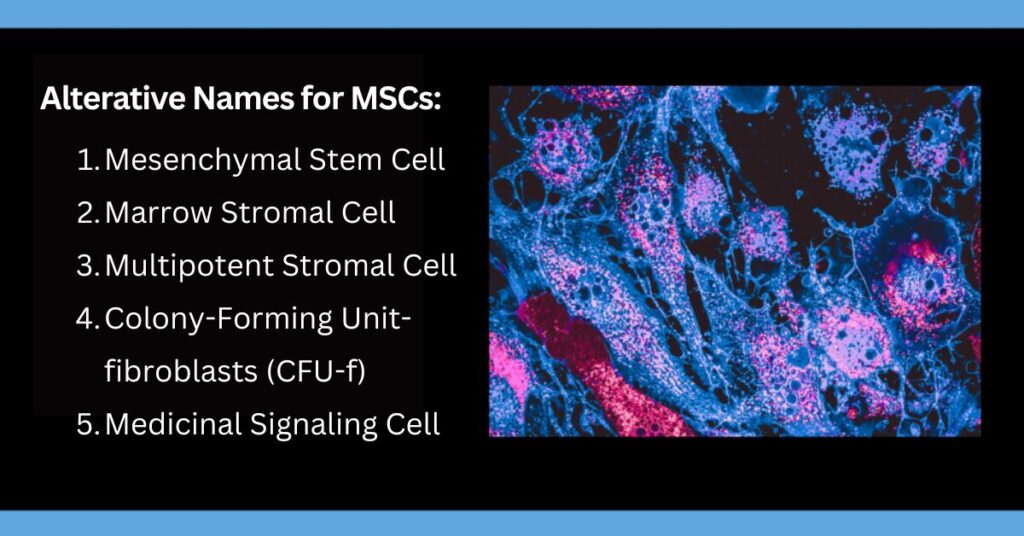
To analyze the emerging global market for mesenchymal stem cells (MSCs), it is important to define the cell type. Broadly defined, MSCs are multi-potent stem cells that can differentiate into a diverse range of cell types. More specifically, MSCs are non-hematopoietic stromal cells that are capable of differentiating into, and assisting in the repair of, tissues of both intra-mesenchymal and extra-mesenchymal lineages.
- 1
- 2
- 3
- …
- 11
- Next Page »