If you’re experiencing health or medical complications, stem cell therapy may be one of the options you are considering. Stem cell procedures can be used to address a variety of health issues. The question is, how do you know that stem cell therapy will work for you? And how can you be sure that the provider you’ve chosen is the best one for your case? [Read more…]
Human Induced Pluripotent Stem Cell (iPSC) Derived Tissues – Present & Future Outlook
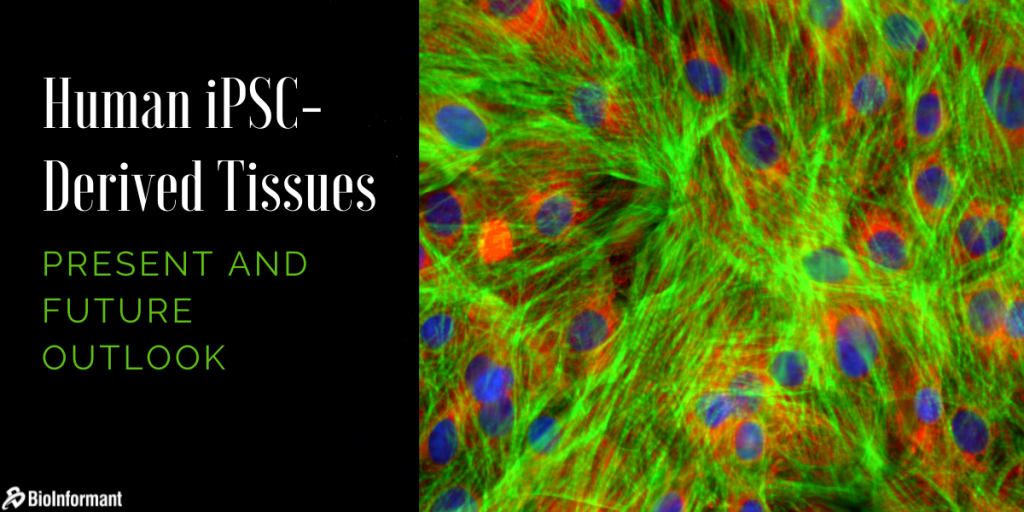
In this article, the present and future outlook for human iPSC-derived tissues is explored. Induced pluripotent stem cells (iPSCs) are differentiated cells that are reprogrammed into a pluripotent state, allowing a wide range of cell and tissue types to be derived from them.
Key findings include:
- iPSC technology is moving from a boutique phenomenon to industrialized cellular models.
- Increasing recognition by industry and regulatory bodies for detecting a variety of toxicities.
- Emerging utility for predicting cardio and neuro-related oncology adverse effects.
Inside the iPSC Industry: Growth, Trends, and Future Directions

Groundbreaking experimentation in 2006 led to the introduction of induced pluripotent stem cells (iPSCs). These are adult cells which are isolated and then transformed into embryonic-like stem cells through the manipulation of gene expression, as well as other methods. Research and experimentation using mouse cells by Shinya Yamanaka’s lab at Kyoto University in Japan was the first instance in which there was successful generation of iPSCs.[1] In 2007, a series of follow-up experiments was done at Kyoto University in which human adult cells were transformed into iPSC cells. [2] Nearly simultaneously, a research group led by James Thomson at the University of Wisconsin-Madison accomplished the same feat of deriving iPSC lines from human somatic cells.[3] [Read more…]
iPSC Applications in Cell Therapy, Drug Discovery, and Beyond
Since the discovery of induced pluripotent stem cell (iPSC) technology 18 years ago, significant progress has been made in stem cell biology and regenerative medicine. New pathological mechanisms have been identified, new drugs identified by iPSC screens are in the pipeline, and the first clinical trials employing human iPSC-derived cell types have been initiated. [Read more…]
iPSCs are Transforming Drug Discovery, Toxicity Testing, Disease Modeling, and Beyond

Induced pluripotent stem cells (iPS cells or iPSCs) are laboratory-made pluripotent stem cells that are produced using adult cells. They are derived from somatic cells by reprogramming artificially and turning on the expression of specific pluripotency genes. The reprogramming is achieved using different techniques with varying efficiencies. The iPSC technology was first discovered in 2006 by Shinya Yamanaka’s lab in Kyoto, Japan. He and his team introduced four specific genes encoding transcription factors and converted adult cells into pluripotent stem cells. [Read more…]
- « Previous Page
- 1
- …
- 27
- 28
- 29
- 30
- 31
- …
- 201
- Next Page »