Description
Market Brief, 61 Pages
December 2025
This week only, you can claim this report for an unusual 50% off. Act fast, because this offer expires soon.
Cell therapies involve the administration of cells or gene-modified cells into patients to treat disease and injury.

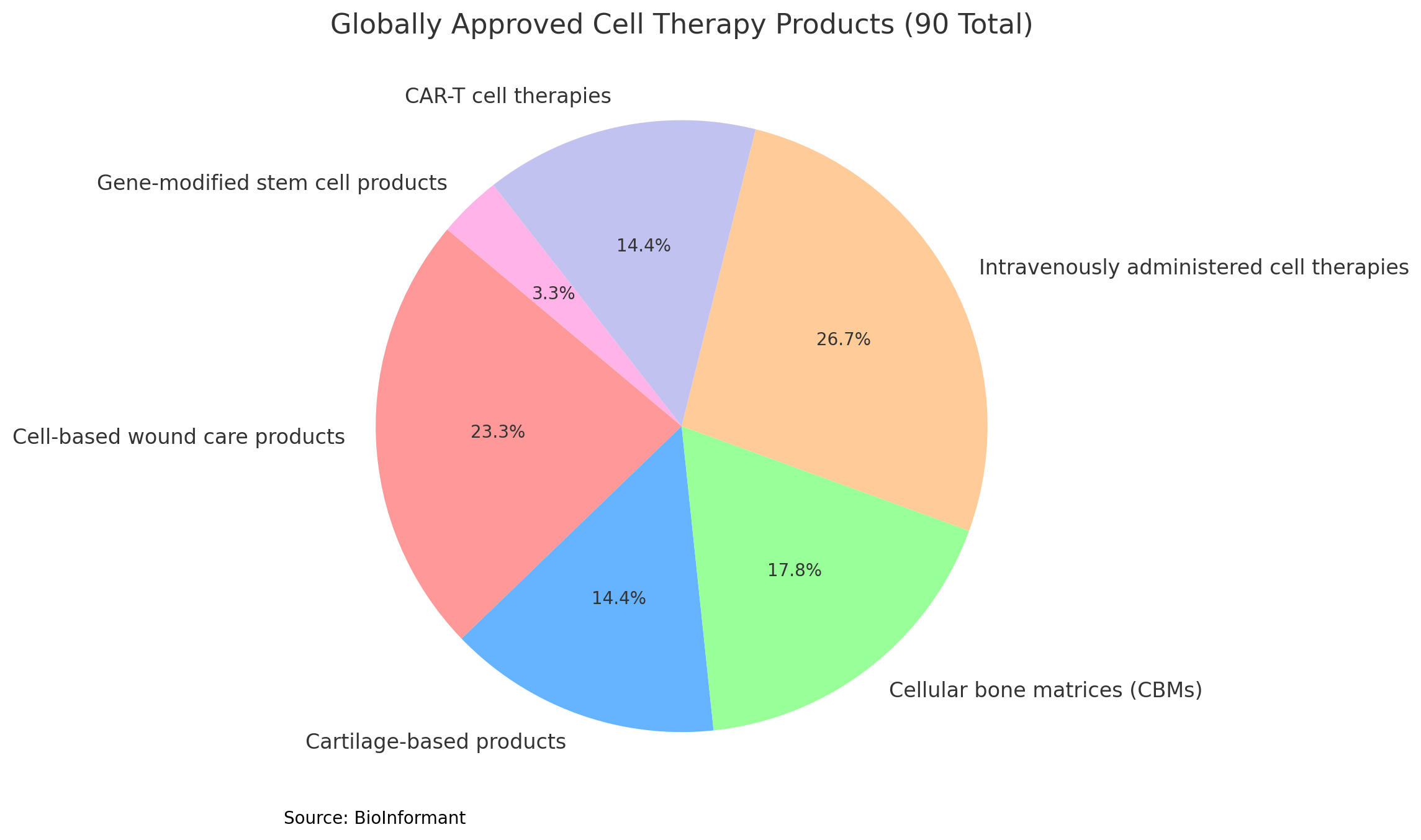
Currently, there are 90 cellular based products approved globally, including:
- Cell-based wound care products – 21 products
- Cartilage-based products – 13 products
- Cellular bone matrices (CBMs) – 16 products
- Intravenously administered cell therapies – 24 products
- CAR-T cell therapies -13 products
- Gene-modified stem cell products – 3 products
The pricing of these cellular therapeutics varies dramatically by type. Thus, this market brief presents the average price range for each category of globally approved cellular therapies, as well as the precise price range for each one (including high and low outliers).
Last year in 2024, these products generated an astounding $13 billion in revenue, establishing them as a commercially significant market segment.
This 61-page market brief includes market approvals and pricing data from the:
- U.S. FDA
- European EMA
- Chinese NMPA
- Japanese PMDA
- South Korean MFDS
- Australian TGA
- Indian CDSCO
- And other leading regulatory agencies worldwide
It reveals:
- Market pricing for all globally approved cell therapies known worldwide
- The identity and type of cell therapies approved worldwide
- Factors influencing the market pricing of cell therapies
- Categories of cell therapy products and their price ranges
- Novel payment and financing models emerging worldwide
Categories of Globally Approved Cell Therapy Products
Cell-based wound care products—21 approved worldwide—are used to treat chronic wounds such as diabetic ulcers, venous ulcers, pressure sores, and burn injuries.
Cartilage-based therapies, with 13 approvals globally, involve implanting cultured chondrocytes to repair damaged cartilage, a tissue with limited natural healing capacity.
Cellular bone matrices (CBMs) comprise 16 approved products. These combine live mesenchymal stem cells (MSCs) with biomaterials and growth factors to promote bone regeneration, particularly in fractures that fail to heal on their own.
Intravenously (IV) administered cell therapies form the largest category, with 24 approved products. These target a broad spectrum of conditions, including cancer, autoimmune diseases, infections, cartilage injuries, spinal damage, and neurological disorders.
CAR-T cell therapies—currently 13 approved worldwide—represent a major advance in cancer treatment. These therapies modify a patient’s T cells to target and destroy cancer cells and are primarily used for leukemia and lymphoma. Of the approved products, seven are in the U.S., four in China, and two in India.
Finally, gene-modified stem cell therapies include three approved products: Strimvelis, Casgevy, and Lyfgenia. These treatments use CRISPR/Cas9 to correct genetic mutations by modifying hematopoietic stem cells (HSCs) outside the body before reinfusion, restoring healthy function at the genetic level.
TABLE OF CONTENTS: Market Pricing Guide for Approved Cell Therapies Worldwide, 2025
This information took BioInformant’s experienced team of analysts hundreds of hours to aggregate, required translators to interpret pricing data across numerous languages, and entailed calls, emails, and repeated outreach to cell therapy developers worldwide.
Whether you’re developing cell therapies, investing in them, supplying the raw materials, or securing IP within this field, this market brief will deliver critical insights you can’t afford to miss.
![[SALE] Global Database of Regenerative Medicine (RM) Industry Investors - Featuring 300+ Investors](https://bioinformant.com/wp-content/uploads/2025/09/RM-Investors-2026-2-400x400.jpg)