In 2006, induced pluripotent stem cells (iPSCs) were first introduced by Shinya Yamanaka at Kyoto University in Japan. Yamanaka’s discovery, which earned him the Nobel prize in 2012, enabled the use of human cells in stem cell science, bypassing the use of embryonic stem cells (ESCs). As a result of this advance, one of the most important applications for induced pluripotent stem cells has become their use as predictive technologies to support and streamline drug safety testing. [Read more…]
What Percentage of Parents Publicly and Privately Store Cord Blood on a Worldwide Basis?
In a prior article, BioInformant shared the following information about domestic rates of public and private cord blood storage within the United States. This article identified that U.S. parents now privately store cord blood for approximately 2.6% of births (102,000 / 3,945,000 births = 2.6%).
If publicly donated cord blood is included too, then approximately 3% of U.S. parents now store cord blood at birth, because there are about 5 cord blood units privately stored for every cord blood unit that is publicly donated.
In this article, let’s consider cord blood banking data on a global basis. [Read more…]
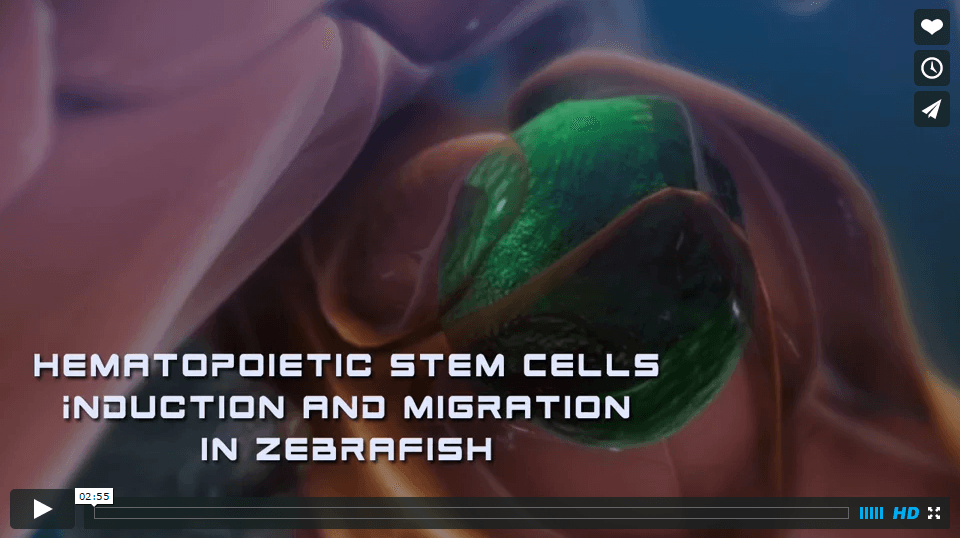
Top Stem Cell Video of the Year! (3 Minutes)
This video published by the Harvard School of Medicine is incredible, winning our award for the “Best Stem Cell Video of the Year.”
It is a zebrafish animation that shows the discoveries made by the Stem Cell Research Program at Boston Children’s Hospital.
Using the zebrafish as a model, it takes you from the birth of a blood stem cell, along its travel through the body, to its site of engraftment.
[Read more…]
Directed Differentiation of Mesenchymal Stem Cells (MSCs) Into Intra-Mesenchymal and Extra-Mesenchymal Lineages
An important mesenchymal stem cell (MSC) application is the differentiation of the cells into specific intra-mesenchymal and extra-mesenchymal lineages, as described below.
Directed Differentiation of Mesenchymal Stem Cells into Intra-Mesenchymal Lineages
Mesenchymal stem cells are multi-potent stem cells that can differentiate into a variety of cell lineages. Since the 1960s when scientists Ernest McCulloch and James Till revealed the clonal nature of marrow-derived mesenchymal cells, it has been understood that MSCs are characterized by plasticity and that their fate can be determined by environmental cues.[1]
It is now evident that culturing marrow stromal cells in the presence of osteogenic stimuli, such as ascorbic acid, inorganic phosphate, and dexamethasone, can promote differentiation into osteoblasts.[2] Alternatively, the addition of Transforming Growth Factor-beta (TGF-b) can induce chondrogenic markers.[3] Myocyte and adipocyte differentiation can be similarly induced.
Directed differentiation of autologous mesenchymal stem cells into intra-mesenchymal lineages is an application that involves identifying pharmacological and molecular pathways that drive MSC differentiation toward mesenchymal derivatives in vitro. Its goal is to assist with predicting molecular mechanisms that will control MSC differentiation in vivo. In particular, there is a need to develop reliable methods for directing the differentiation of human mesenchymal stem cells (hMSC) within regenerative medicine applications. Most research in this area is focused on embedding mesenchymal cells into defined protein microenvironments and tracking directed differentiation through cell morphology, gene expression, and cell activity.
Directed Differentiation of MSCs into Extra-Mesenchymal Lineages
Directed differentiation of autologous mesenchymal stem cells into extra-mesenchymal lineages is another interesting area of stem cell biology, with the potential to repair tissues where resident stem cells are not accessible. The potential to differentiate MSCs into neuronal cells is a possibility that has already been demonstrated[4] and an area that continues to be of significant clinical interest.
It has also been demonstrated that mesenchymal stem cells can differentiate into beta-pancreatic islet cells[5]. In 2004, Chen and colleagues explored the possibility that bone marrow mesenchymal stem cells could differentiate in vitro into functional islet-like cells. His research team discovered that when rat MSCs were isolated and cultured, passaged MSCs could be induced to differentiate into typical islet-like clustered cells. Insulin mRNA and protein expressions were positive in populations of the differentiated cells, and nestin could be detected in pre-differentiated cells.
Furthermore, insulin excreted from differentiated MSCs was much higher than that from pre-differentiated cells, and injecting the differentiated MSCs into diabetic rats supported down-regulation of glucose levels in test subjects. As such, transplantation of MSC-derived islet-like functional cells may eventually be used in clinical applications for the treatment of diabetes.
However, some scientists believe that experimentation in this area is inconclusive and that substantial research needs to be done before human studies are untaken that involve mesenchymal stem cell-derived neural- or beta-pancreatic islet cells. While it is true that mechanisms for extra-mesenchymal differentiation are not well understood, cautious optimism does seem appropriate.
One reason that research in this area will continue is that there is significant medical need for extra-mesenchymal lineage cell types, including neural cells that could be used for the treatment of degenerative brain diseases, hepatic cells that could be used for diabetic therapy applications, and more. In addition, research in this area will be driven by the wide range of benefits associated with MSCs, which include ease of acquisition from a range of adult tissues, flexible methods for growth in culture, and expansion capabilities that allow for clinically relevant quantities to be obtained.
FOOTNOTES:
[1] Becker AJ, McCulloch EA, Till JE. Cytological demonstration of the clonal nature of spleen colonies derived from transplanted mouse marrow cells. Nature 1963; 197: 452–454.
[2] Ye CP, et al. Culture media conditioned by heat-shocked osteoblasts enhances the osteogenesis of bone marrow-derived mesenchymal stromal cells. Cell Biochem Funct 2007; 25(3): 267-276.
[3] Mehlhorn AT, et al. Mesenchymal stem cells maintain TGF-beta-mediated chondrogenic phenotype in alginate bead culture. Tissue Eng 2006 Jun; 12(6): 1393-1403.
[4] Engler AJ, Sen S, Sweeney HL, Discher DE. Matrix Elasticity Directs Stem Cell Lineage Specification. Cell 2006; 126(4): 677-689.
[5] Chen LB, Jiang XB, Yang L. Differentiation of rat marrow mesenchymal stem cells into pancreatic islet beta-cells. World J Gastroenterol 2004; 10(20): 3016–3020.
Axol Bioscience to Launch Novel iPSC-Derived Cells at ISSCR 2016
The human cell culture specialists showcase innovative tools and applications for disease modelling and drug discovery
Cambridge, UK, 1 June 2016: Axol Bioscience, a biotechnology company specialising in the supply of human induced pluripotent stem cell (iPSC)-derived cells has expanded its range of drug discovery and disease modelling tools. Axol will launch three exciting products at International Society for Stem Cell Research (ISSCR) 2016 taking place in San Francisco, CA from 22 – 25 June. This includes: Human iPSC-Derived Atrial Cardiomyocytes, Human iPSC-Derived Endothelial Colony Forming Cells (ECFCs) and axolGEMs (Genetically Edited Models), Axol’s new range of isogenic human iPSC-derived cells carrying disease-relevant mutations developed in partnership with Horizon Discovery plc. Axol and its collaborators will also be presenting an Innovation Showcase and posters highlighting the characteristics and functional applications of its human iPSC-derived neural cells and cardiomyocytes. [Read more…]
- « Previous Page
- 1
- …
- 158
- 159
- 160
- 161
- 162
- …
- 201
- Next Page »