We have released coverage of this week’s stem cell industry activity that I am excited to share with you. It was a major week for stem cells, with CDI launching Opsis Therapeutics, Provia Laboratories expanding its stem cell product portfolio, CCBC getting a FDA Biologics License for CLEVECORD™, STEMCELL Technologies exploring genomic instability in an upcoming webinar, and iPSCs turning 10. [Read more…]
Cellular Dynamics International (CDI) Launches Opsis Therapeutics to Develop Cell Therapies for Retinal Diseases
MADISON, WIS, September 28, 2016 – Cellular Dynamics International, Inc. (CDI), a FUJIFILM company and the leading developer and manufacturer of induced pluripotent stem cell (iPSC) products, today announced a new venture, named Opsis Therapeutics. Formed on July 31, Opsis Therapeutics is focused on discovering and developing novel medicines to treat patients suffering from retinal diseases. [Read more…]
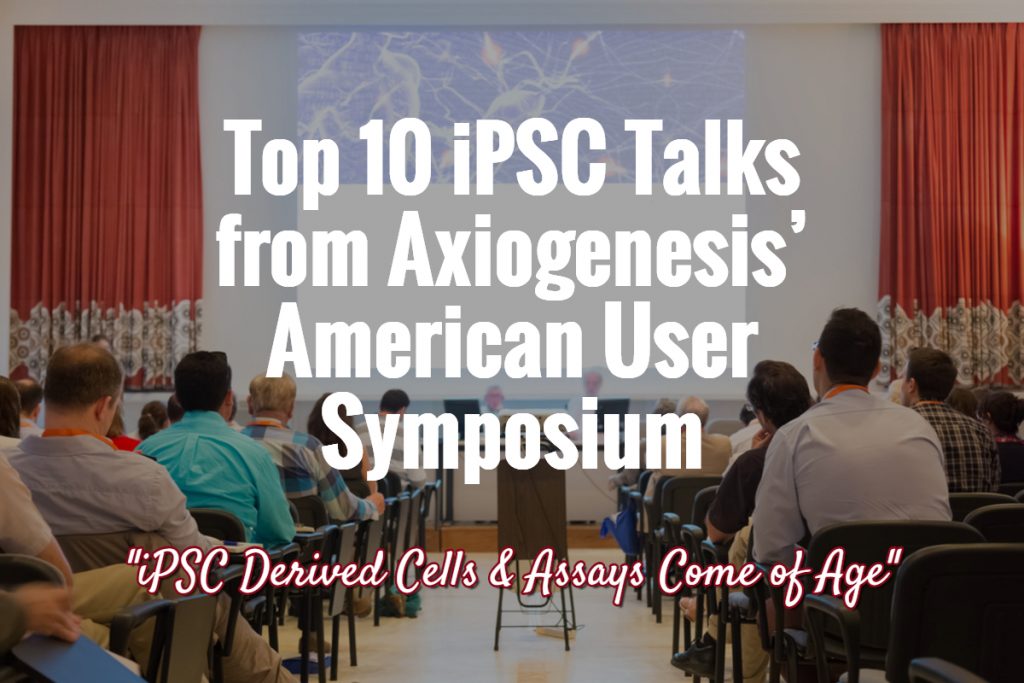
Top 10 iPSC Talks from Axiogenesis’ American User Symposium
Axiogenesis hosted an American user symposium titled, “iPSC Derived Cells & Assays Come of Age.” Held in Boston, Massachusetts (June 13, 2016), the symposium explored how experts in the pharmaceutical industry and academia use Axiogenesis’ cells and assays within drug discovery, safety/toxicology screening, and bioengineering applications.
It also presented current approaches to establish and define standards for these cellular models. Widely attended by representatives from the pharmaceutical sector, symposium attendees had the valuable opportunity to view case studies of iPSC-derived cells utilized in drug development decision-making and biomedical research.
To capture highlights from the event and facilitate thought-provoking conversation, below is a list of the top 10 talks from the recent Axiogenesis’ iPSC user symposium. [Read more…]
UK Regulatory Authority Approves Cynata Therapeutics’ Phase I GvHD Clinical Trial
- UK regulatory authority MHRA approves Phase 1 trial with Cymerus(TM) MSCs
- World first clinical trial with allogeneic iPSC-derived product
- Major milestone for stem cell therapeutics and regenerative medicine
- Cements Cynata’s global leadership in second generation MSC therapeutics
Cynata Approved to Launch World’s 1st Clinical Trial with an Allogeneic iPSC-Derived Product
In a major world first, Australian stem cell company Cynata Therapeutics (ASX:CYP) announced it received advice from the UK Medicines and Healthcare products Regulatory Agency (MHRA) that its Phase I clinical trial application has been approved.
The clinical trial has been named “An Open-Label Phase 1 Study to Investigate the Safety and Efficacy of CYP-001 for the Treatment of Adults With Steroid-Resistant Acute Graft Versus Host Disease” (NCT02923375).
It will be the world’s first clinical trial involving a therapeutic product derived from allogeneic (unrelated to the patient) induced pluripotent stem cells (iPSCs).
Highlights of Cynata Therapeutics’ Upcoming Phase 1 Clinical Trial (Protocol Number: CYP-GvHD-P1-01)
Participants for Cynata’s upcoming Phase I clinical trial must be adults who have undergone an allogeneic haematopoietic stem cell transplant (HSCT) to treat a haematological disorder and subsequently been diagnosed with steroid-resistant Grade II-IV GvHD.

The first eight participants will be enrolled in Cohort A and receive two infusions of CYP-001 at a dose of 1 million cells per kilogram of body weight (cells/kg), up to a maximum dose of 100 million cells.
There will be one week between the two CYP-001 infusions in each patient.
The next eight participants will be enrolled into Cohort B and receive two infusions of CYP 001 at a dose of 2 million cells/kg, up to a maximum dose of 200 million cells.
The primary objective of the trial is to assess safety and tolerability, while the secondary objective is to evaluate the efficacy of two infusions of CYP-001 in adults with steroid-resistant GvHD.

Efficacy will be assessed on the basis of response to treatment (as determined by change in GvHD Grade) and overall survival at 28 and 100 days after the administration of the first dose.
Participants will also be followed up for up to two years under a separate non-interventional study protocol.
Importantly, Cynata’s Cymerus™ mesenchymal stem cell (MSC) technology is a second generation process that does not rely on multiple donors or massive expansion of the end product, and therefore, is a commercially viable solution to the manufacture of consistent, robust MSC therapeutic products.
- « Previous Page
- 1
- …
- 63
- 64
- 65
- 66
- 67
- …
- 79
- Next Page »