
The cord blood banking industry is often surrounded by misleading metrics, making insights from experts especially valuable. In an interview with Kenneth Harris, Chief Advisor for CuraSense Advisors, we delve into his extensive knowledge of the field. The discussion covers global growth rates, key trends shaping the industry, geographic differences in opportunities, and more, providing a comprehensive look at this evolving sector.
Sponsored Content: Interivews published by BioInformant are paid content. BioInformant is not responsible for the accuracy or claims made in these interviews and does not endorse the views expressed by the interviewees.
Nucleus Biologics, Enabling Reproducible Science with David Sheehan (CEO)


In this interview with David Sheehan (CEO), we explore how Nucleus Biologics is revolutionizing the cell culture market through a concept known as “Precision Cell Culture.” The focus of Nucleus Biologics is to deliver superior cell culture products by leveraging a transparent, consistent and proven supply chain that eliminates variability for its customers. In addition to its novel Physiologix™ product line, Nucleus Biologics provides the highest quality Australia and New Zealand origin fetal bovine serum (FBS) available in the market with a goal to enable better lifesaving science.
With an estimated $28 billion lost per year to irreproducible biology research, it is clear that the market is overdue for disruption and Nucleus Biologics appears to be the company positioned to do it. In this interview, we explore Mr. Sheehan’s background, the disruptive nature of Nucleus Biologics, and his inspiring vision for the future. [Read more…]
Cord Blood Banking in India, a Country That is Home to 1.8 Billion
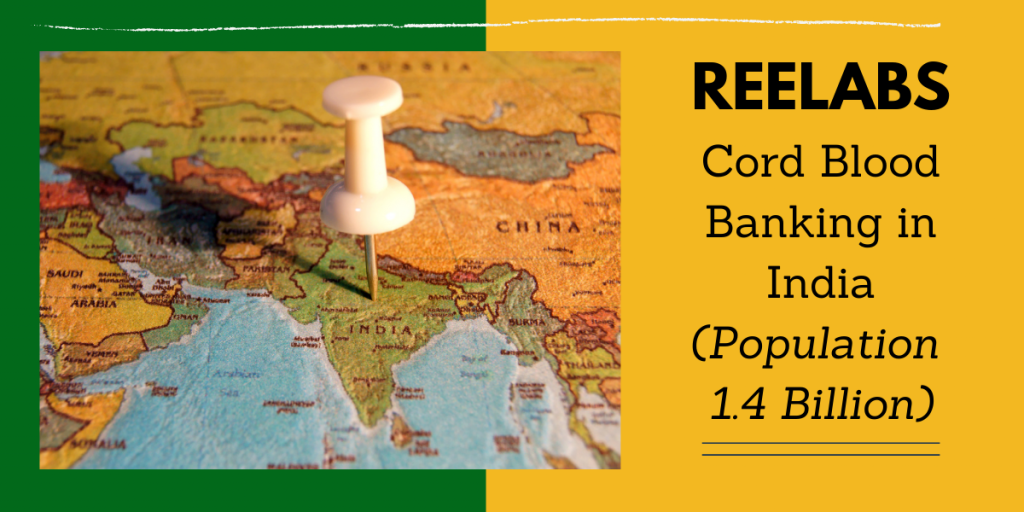
ReeLabs is an important cord blood banking brand within India. Cord blood banking in this region is of historic importance, because India has an astounding population of 1.4 billion. Representing 18% of the global population, nearly one-in-five people lives in India, placing it head-to-head with China as the world’s most populous country. India’s population growth is fueled by a birth rate (19 births/1,000 population) that substantially exceeds its death rate (7.3 deaths/1,000 population).
If you’re involved with cord blood banking, then you need to pay attention to this enormous consumer market.
In this interview with Dr. Abhijit Bopardikar, Director of ReeLabs, he explains the rise of cord blood banking within India and discusses the importance of pairing stem cell therapy and research applications with stem cell storage services.
[Read more…]
An Expert’s Perspective on Accelerated Pathways for Cell Therapy Approvals


Over the past few years, the regulatory landscape for cell therapy development has grown increasingly complex. There are now accelerated pathways for advanced therapy medicinal products (ATMPs) in several countries worldwide, including the U.S., Japan, and South Korea. While the possibility for accelerated commercialization has resulted from these changes, substantial complexity has also been introduced, making it a more elaborate process to move cell therapy products from “bench to bedside.”
In the interview with Yaron Ramati, Director of Regulatory Affairs at Pluristem Therapeutics, we get an expert’s perspective on how the regulatory environment has changed and new opportunities that exist for bringing cell therapy products through the clinical trial process and into the global marketplace. [Read more…]
Hemostemix. The Canadian Biotech that Could Change Healthcare as We Know It.
*Sponsored Content: The article is sponsored by Hemostemix Inc.
Hemostemix Inc. (“Hemostemix”) (TSX Venture:HEM; OTCQB:HMTXF) is a publicly traded clinical-stage biotech company that develops and commercializes blood-derived stem cell therapies for medical conditions lacking adequate treatment options. Importantly, it is one of the first clinical-stage biotech companies to test a stem cell therapy within an international, multi-center Phase II clinical trial for patients with critical limb ischemia (“CLI”). CLI is a severe form of peripheral artery disease (“PAD”) that is caused by reduced blood flow to the extremities. [Read more…]
- « Previous Page
- 1
- …
- 4
- 5
- 6
- 7
- 8
- …
- 15
- Next Page »