What are Perinatal Stem Cells? Your Definitive Guide
Perinatal stem cells are obtained around the time of birth, either shortly before or after. They can be sourced from umbilical cord blood and tissue, placental blood and tissue, as well as amniotic fluid and tissue.
When stem cells were first identified, only two types of stem cells were described: embryonic stem cells and adult stem cells. Today, a diverse range of stem cells exist, because the diversity of adult stem cell types has substantially expanded and induced pluripotent stem cells (iPSCs) have since been discovered. [Read more…]
How to Find a Stem Cell Clinical Trial for Your Condition
Are you or a loved on suffering from arthritis, multiple sclerosis (MS), COPD, Alzheimer’s disease, asthma, or other chronic condition? If so, how do you find a stem cell clinical trial?
This article provides the answers, including links to find a clinical trials near you, as well as links to clinical trials for specific conditions.
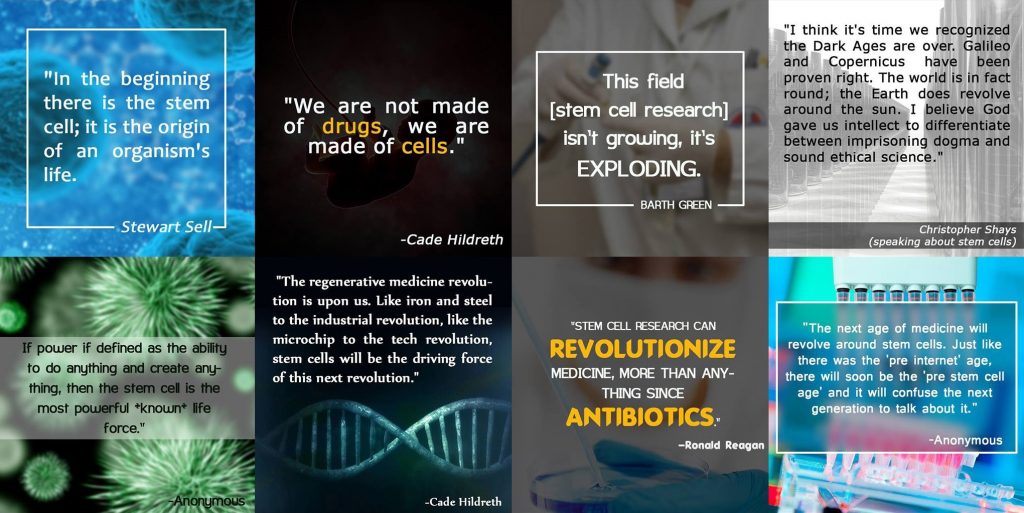
Top 8 Stem Cell Quotes of All-Time
Many experts have spoken about the power of stem cells and their ability to alter the field of healthcare forever, including these top stem cell quotes of all-time. With exponential progress occurring in the field, stem cells are ushering in an age of regenerative medicine that will transform healthcare in ways that are now inconceivable.
In coming decades, stem cells will be reversing diseases ranging from Alzheimer’s to autism, re-growing organs and tissues, and potentially allowing the first humans to reach the age of 200.
Some exciting advances with stem cells include these “science fictions” that have become “science facts”: [Read more…]
Best Practices in MSC Culture: Tracking and Reporting Cellular Age Using Population Doubling Level (PDL)
Author: Jon Rowley, RoosterBio
This is a guest post from RoosterBio. RoosterBio is an innovative company that provides standardized stem cell product platforms to enable rapid clinical and commercial translation.
There has been much discussion in the literature and the blogosphere (here, here, and here) lately about keeping track of cellular age, and there is very good reason for this. First, there are multiple regulatory guidelines that propose tracking the age of cells used in biologics manufacturing. Secondly, it is well documented that cell phenotype and function can be compromised the older a cell is. A few examples from the literature as this relates to human Mesenchymal Stem Cells (hMSCs) are: [Read more…]
- « Previous Page
- 1
- 2
- 3
- 4
- 5
- …
- 24
- Next Page »