
 MELBOURNE, Australia, June 21, 2018 — Australian stem cell and regenerative medicine company Cynata Therapeutics Limited (ASX:CYP) is pleased to announce positive safety and efficacy data from a day 28 analysis of patients in Cohort B of its Phase 1 clinical trial of CYP-001, the Company’s lead Cymerus™ mesenchymal stem cell (MSC) product candidate, in steroid-resistant acute graft-versus-host disease (GvHD). [Read more…]
FUJIFILM CDI Partners with UC Irvine to Commercialize iPSC-derived Microglia & Media
FUJIFILM Cellular Dynamics licenses University of California – Irvine’s technologies for derivation of microglia
 MADISON, Wis., June 6, 2018 — FUJIFILM Cellular Dynamics, Inc. (FCDI), a leading developer and manufacturer of human induced pluripotent stem cells (iPSCs) and differentiated tissue-specific iPSCs, announced today that it has entered into an exclusive patent license agreement with the University of California – Irvine (UCI) through its offices at UCI Applied Innovation to license and commercialize UCI’s technologies for derivation of microglia in the commercial research field and also a non-exclusive patent license agreement to commercialize microglia media formulation. [Read more…]
World’s First Clinical Application of iPS Cells for Cardiac Disease

On 16 May, Nature News reported that “Japan’s health ministry gave doctors at Osaka University permission to take sheets of tissue derived from iPS cells and graft them onto diseased human hearts.” The team of Japanese doctors, led by cardiac surgeon Yoshiki Sawa at Osaka University, will use iPS cells to “create a sheet of 100 million heart-muscle cells.”
From preclinical studies in pigs, the team determined that thin sheets of cell grafts can improve heart function, likely through paracrine signalling. Paracrine signalling is a type of cell-to-cell communication through which cells “talk” to one another, often regulating inflammation, fibrosis (scarring), and and cellular recovery.
While the treatment will only be tested in three patients, a follow-up trial could enroll ten or more patients. Under Japan’s accelerated regulatory pathway for regenerative medicines (cell, gene and tissue products), Dr. Sawa’s iPS cell therapy could be conditionally marketed to the public if a follow-up trial demonstrated safety and an initial proof of efficacy.
Launched in late 2014, Japan’s fast-track system allows for regenerative therapies to receive conditional marketing authorization for up to 7 years, following confirmation of safety and an initial proof of efficacy in Japan in diseases that are serious and have a high unmet need. [Read more…]
Japan to Supply Human Embryonic Stem Cells (hESC) for Clinical Research
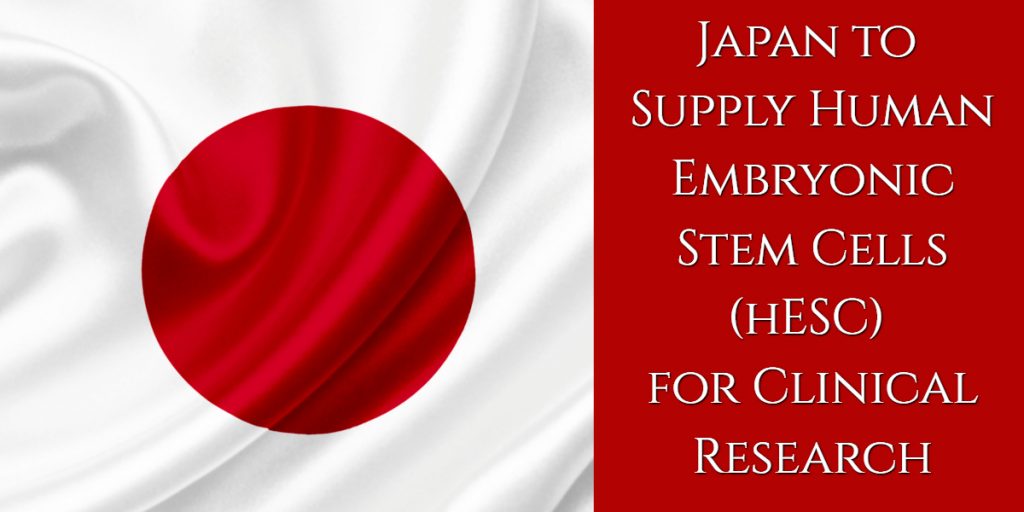
Kyoto University has announced that it will start providing human embryonic stem cells (ES cells) by July 2018 to universities and companies within Japan for clinical trial applications. This is a world-first, as most countries have been hesitant to support wide-spread production and distribution of this controversial cell type.
Previously Japan limited the use of human embryonic stem cells to basic research, because the cells are produced from human embryos, making them a highly controversial cell type. In 2014, the Japanese government revised it guidelines, making possible the use human ES cells in clinical studies, as well as laboratory research. [Read more…]
Market Players Developing iPS Cell Therapies
While a number of companies have dabbled in this space, the following players are leaders in the development of iPS cell therapies: Cellular Dynamics International (a Fujifilm Company), Cynata Therapeutics, RIKEN, and Astellas (previously Ocata Therapeutics).
iPS Cell Therapy Market Players
In this article:
- Cellular Dynamics International, Owned by FujiFilm
- Cynata Therapeutics
- RIKEN
- Astellas, Previously Ocata Therapeutics
Leading iPS Cell Therapy Companies
The four companies and organizations below are major innovators of iPSC therapeutics.
[Read more…]
- « Previous Page
- 1
- …
- 54
- 55
- 56
- 57
- 58
- …
- 79
- Next Page »