A South Korea–based regenerative medicine company, iPS Bio, Inc., is accelerating its international footprint with the establishment of a new Japanese subsidiary in Yokohama, Kanagawa Prefecture. The move reflects a broader trend of cross-border collaboration in the induced pluripotent stem cell (iPSC) sector, particularly between leading innovation hubs in East Asia. [Read more…]
Cell-Easy Launches an iPSC-Derived Beta Cell Program to Tackle Scale-Up Challenges

Backed by a €12M Bpifrance grant, the program builds a GMP-compatible manufacturing platform for iPSC-derived cell therapies — directly applicable to biotech and pharma iPSC programs.
Toulouse, 2026 April 16th – Scale-up remains one of the most critical unsolved challenges in iPSC-derived cell therapy. Despite strong clinical promise, most manufacturing processes today can only supply material for a very limited number of patients — a bottleneck that limits clinical progression and commercial viability across the field. [Read more…]
iPSC Therapies Make History: Japan Authorizes World’s First Two iPSC-based Cell Therapies

Recently, the world witnessed the approval of the world’s first two iPSC-derived medicines, as Japan’s health ministry panel authorized their commercialization on February 19, 2026. The approved therapies are ReHeart, developed by Cuorips Inc., a regenerative medicine company spun out of research at Osaka University, and Amchepry, developed by Sumitomo Pharma Co., Ltd. in collaboration with Racthera Inc. [Read more…]
Key Events in the Evolution of iPSC Products that You Need to Know
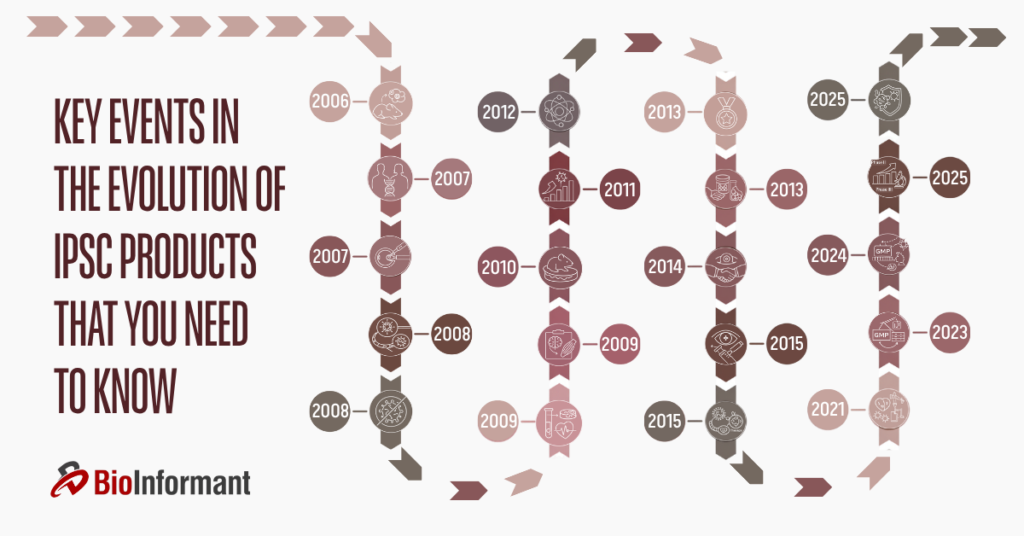
Developing induced pluripotent stem cell (iPSC) products requires a thorough understanding of the evolution of iPSC research advances. Because the cell type was recently discovered in 2006, the following presents a decade-long timeline of key events in the discovery and evolution of induced pluripotent stem cell products.
The research events below drove forward interest in the use of iPSCs for basic research and clinical applications. These events are the reason that the first clinical trial involving the implantation of iPSCs into humans was initiated in 2013, to assess the capacity of the cell type to treat loss of eyesight due to macular degeneration.
For this reason, stem cell company executives and stem cell industry investors will be better suited to make future decisions about iPSC products if they have a historical understanding of the recent past and the rate at which research advances with the cell type accelerated. [Read more…]
Gameto Licenses Foundational Meiosis IP from Harvard to Advance Human Ovary-in-a-Dish Platform
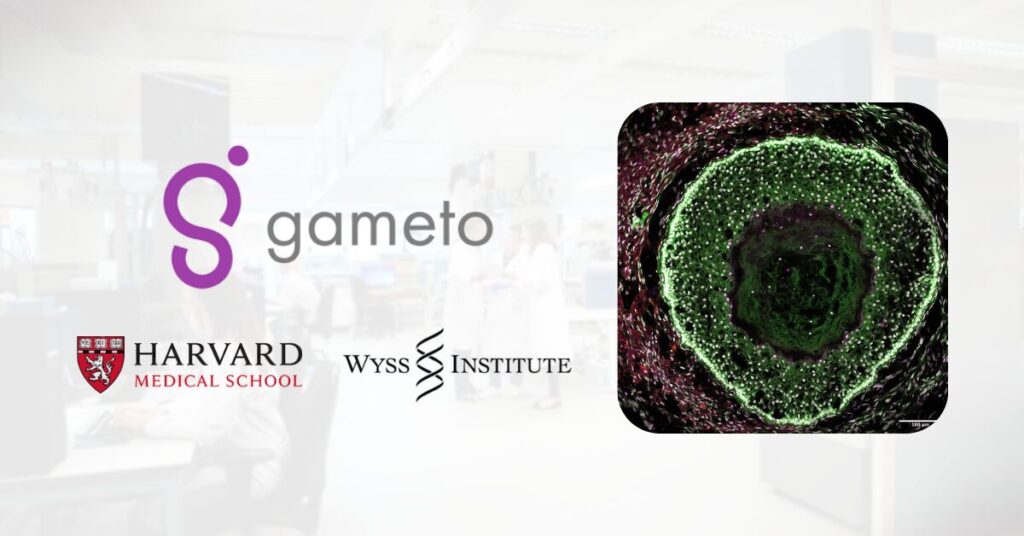
Newly licensed intellectual property enables genetic induction of early meiosis, further strengthening Gameto’s best-in-class platform for modeling human ovarian development and disease
AUSTIN, Texas, Jan. 29, 2026 –– Gameto, a clinical-stage biotechnology company advancing cell engineering solutions for women’s health, announced that it has exclusively licensed additional intellectual property from Harvard University related to the induction of meiosis in human cells. The IP builds upon prior work conducted under Gameto’s sponsored research agreement with George Church’s laboratory at Harvard Medical School and the Wyss Institute for Biologically Inspired Engineering.
- « Previous Page
- 1
- …
- 3
- 4
- 5
- 6
- 7
- …
- 79
- Next Page »