In 2005, Congress passed the Stem Cell Therapeutic and Research Act, initiating the federally supported National Cord Blood Inventory (NCBI) program to increase the number of publicly available cord blood units for transplant. The law initially aimed to build an inventory of roughly 150,000 high-quality, diverse cord blood units to improve the likelihood of finding matches for patients in need. Today, the NCBI continues to contract with public cord blood banks across the United States, collecting and maintaining tens of thousands of units and making them searchable through the national registry for patients and physicians. [Read more…]
Cord Blood
Because cord blood present within a newborn’s umbilical is rich with stem cells, it can be collected and stored for future medical use.
FDA Approves First Cellular Therapy to Treat Patients with Severe Aplastic Anemia
December 08, 2025, Silver Spring, MD (U.S. FDA) — The U.S. Food and Drug Administration announced that it has approved Omisirge (omidubicel-onlv), the first hematopoietic stem cell transplant (HSCT) therapy to treat patients with severe aplastic anemia (SAA). Omisirge is indicated for adults and pediatric patients 12 years and older with hematologic malignancies and now is approved for adults and pediatric patients six years and older with SAA following reduced intensity conditioning and for whom a compatible donor is not available. [Read more…]
Cord Blood and Tissue Banking Market Dynamics in 2026

The first transplant using cord blood-derived hematopoietic stem cells was performed in October 1988. Since that year, remarkable achievements have been made in terms of research into umbilical cord blood-derived hematopoietic and progenitor cells. More than 40,000 UCB transplants (UCBTs) have been performed across different geographies of the world, in both children and adults, to treat diseases that include hematologic, metabolic, immunologic, neoplastic, and neurologic disorders. [Read more…]
Hematopoietic Stem Cells: What Diseases Can these Stem Cells Treat?
Hematopoietic stem cells (HSCs) are defined as stem cells that have a preference for becoming cells of the blood and immune system, such as white blood cells, red blood cells, and platelets. Found in the peripheral blood and bone marrow, hematopoietic stem cells are also present in plentiful supply within the umbilical cord blood of newborn babies.
For the past thirty years, cord blood has been used within transplant medicine, including for the treatment of leukemia and other blood diseases. For most conditions in which a bone marrow or peripheral blood stem cell transplant is an option, a cord blood transplant is a potential alternative.
Hematopoietic Stem Cells
In this article:
BMS Makes a Bold Leap into CAR-T Buying Orbital Therapeutics for $1.5B
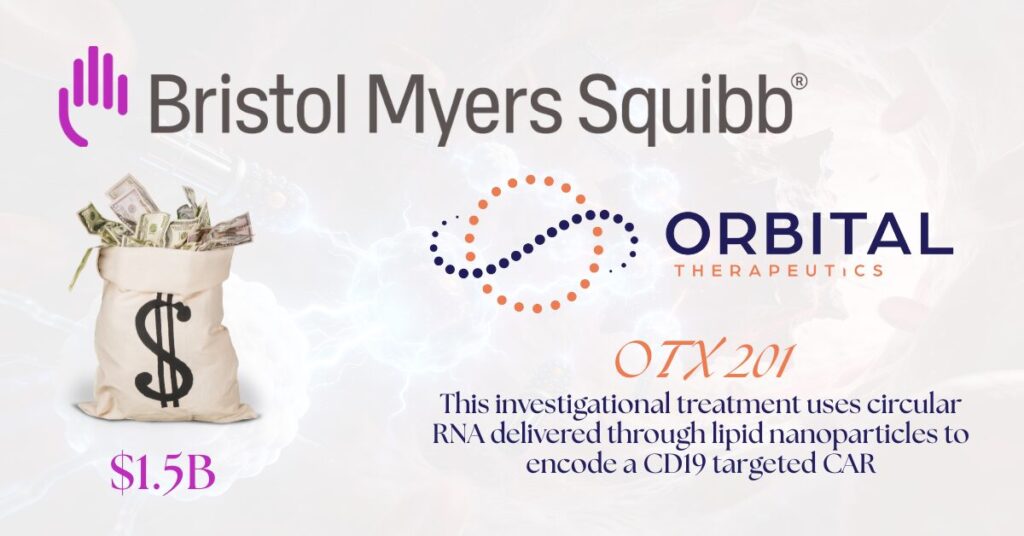
On October 10th, 2025, Bristol Myers Squibb (BMS) announced its plan to acquire Orbital Therapeutics for 1.5 billion dollars in cash. This decisive move places BMS directly into the rapidly growing in vivo CAR T sector. Orbital Therapeutics, based in Cambridge, Massachusetts, has been advancing a next generation RNA platform that is designed to reprogram immune cells inside the body instead of relying on the traditional practice of engineering cells outside the body.
Central to the acquisition is Orbital’s lead candidate, OTX 201. This investigational treatment uses circular RNA delivered through lipid nanoparticles to encode a CD19 targeted CAR. The goal is to create CAR expressing cells directly within the patient. This approach could reshape the entire cell therapy landscape by eliminating complex external manufacturing steps. [Read more…]
- « Previous Page
- 1
- …
- 3
- 4
- 5
- 6
- 7
- …
- 62
- Next Page »