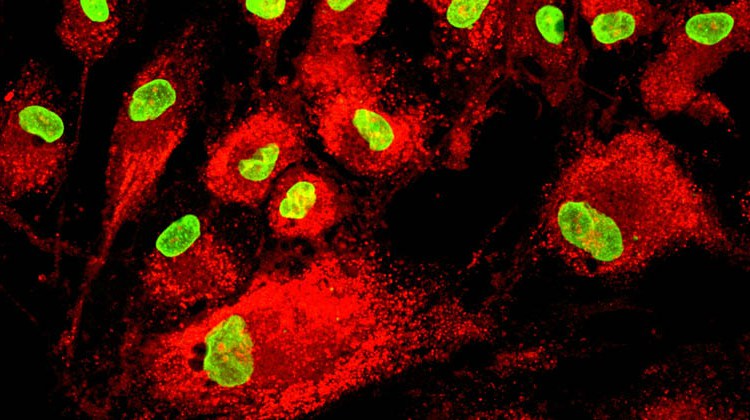
Mesenchymal stem cells (MSCs) are multipotent stem cells that can differentiate into a variety of cell types, including osteoblasts, chondrocytes, myocytes, and adipocytes. MSCs are of intense therapeutic interest, because they represent a population of cells with the potential to treat a range of acute and degenerative diseases. MSCs are advantageous over other stem cells types for a variety of reasons, including that they are immunoprivileged, making them an advantageous cell type for allogeneic transplantation. [Read more…]
MUSE Cells Now Available at Longevity Medical Institute®
As part of its Regenerative Neurology Program, Longevity Medical Institute® is making MUSE cell therapy available to select patients, using cells produced in-house at the Institute’s biotechnology laboratory.
SAN JOSÉ DEL CABO, BAJA CALIFORNIA SUR, MEXICO, September 18, 2026 – Longevity Medical Institute® today announced the addition of MUSE cells to the advanced cell types produced in its in-house biotechnology laboratory.
“By isolating, enriching, and characterizing the MUSE cell population within the MSC cultures already produced in our in-house biotechnology laboratory, we have greater control over quality evaluation, release, and delivery for patient care,” said Dr. Kirk Sanford, founder and CEO of Longevity Medical Institute.
Longevity Medical Institute’s exclusive biotechnology partner, ITC, developed the MUSE stem cell product. MUSE stands for multilineage-differentiating stress-enduring. The recognized starting phenotype includes SSEA-3 and CD105 double positivity, supported by OCT3/4, SOX2, and NANOG. S1PR2 is associated with their proposed injury-directed migration. [Read more…]
Exosomes: Company Spotlights from “A” to “Z”
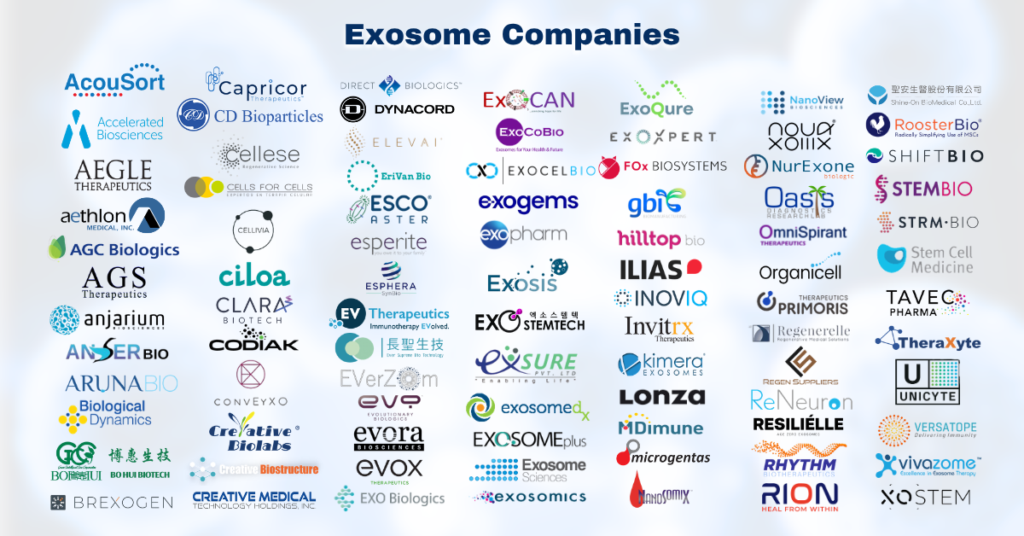
Exosomes are small vesicles ranging from 30-100nm in size that are found in nearly all eukaryotic fluids and facilitate a range of important cellular functions. They transfer DNA, RNA, and proteins to other cells, thereby altering the function of the targeted cells. In recent years, exosomes have gained attention as a strategy for accessing the therapeutic effects of cells without the risks and difficulties of administering the cells to patients.
With at least 26,805 scientific articles published about exosomes and 301 clinical trials underway, these small vesicles have intriguing potential to be used within a range of therapeutic applications. The term “exosomes” has become an increasingly common Search Term on Google over the past 10 years, as shown in the graph below: [Read more…]
The Pipeline for iPSC-Derived Cell Therapeutics in 2026
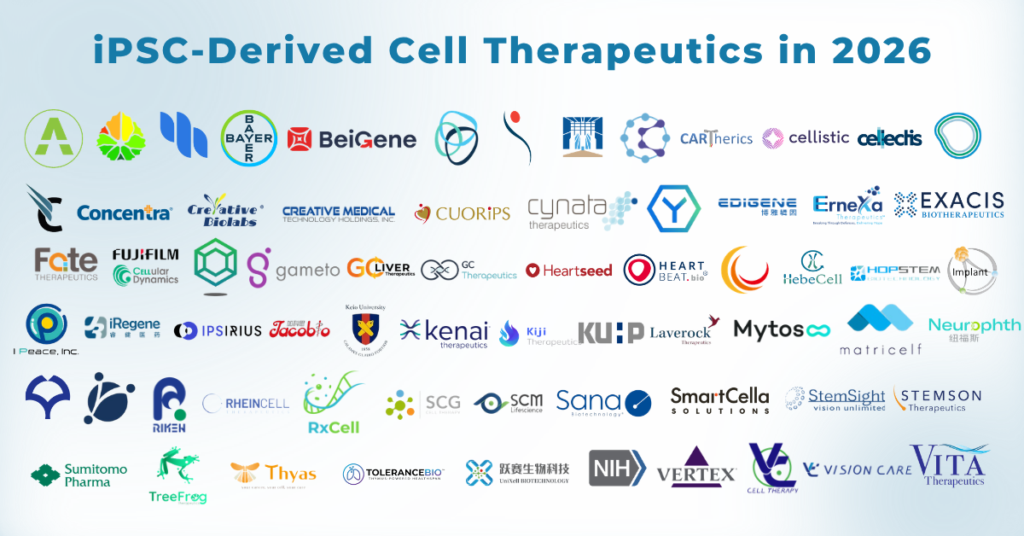
Despite progress involving the use of induced pluripotent stem cells (iPSCs) within disease modeling and drug discovery applications, it will be a long path to achieve the broad-scale use of iPSC-derived cell types in human patients. [Read more…]
Five Acquisitions, $600M in VC, and a $1B Milestone: Exosome Dealmaking in 2026
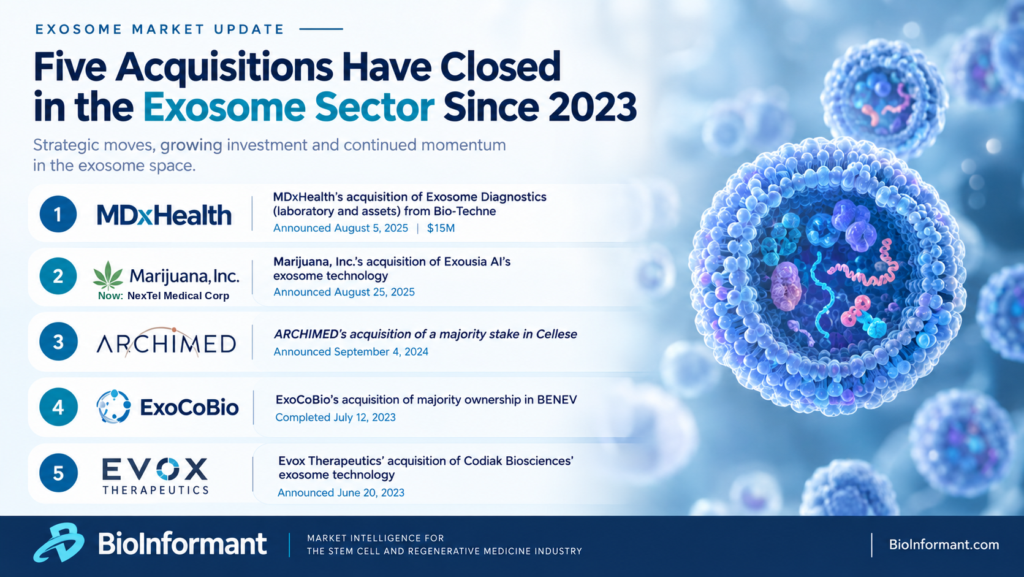
Since 2010, exosome companies have quietly built a private capital base exceeding $600M, closed at least five strategic acquisitions in the past three years alone, and struck licensing agreements with milestone structures reaching as high as $1B. None of this activity has produced a single IPO yet, which makes the financing story here unusual: a maturing industry building its capital structure almost entirely through venture rounds, acquisitions, and platform licensing rather than public markets. [Read more…]
- « Previous Page
- 1
- 2
- 3
- 4
- 5
- 6
- …
- 339
- Next Page »