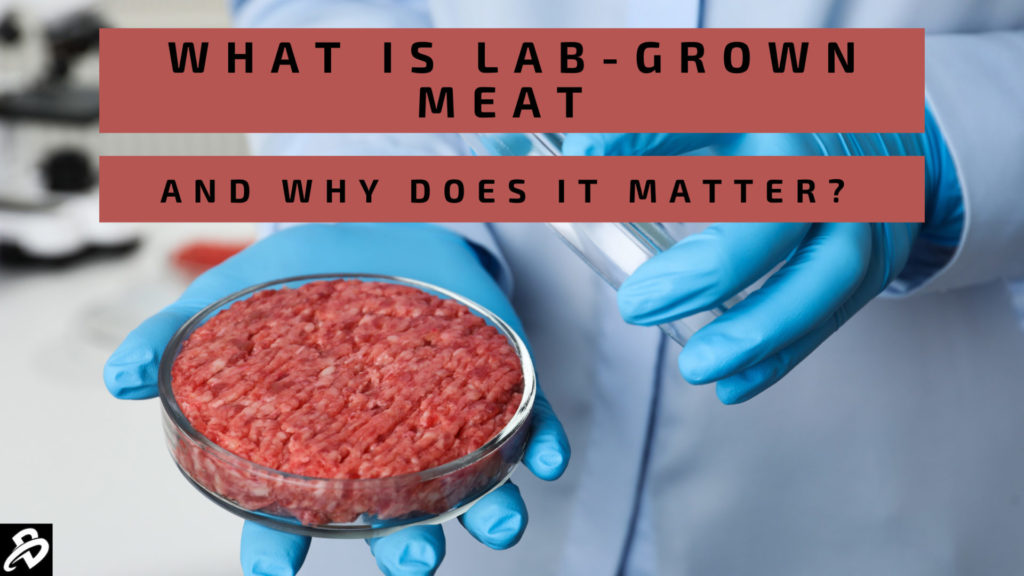
The potential of lab-grown meat has captured the attention of investors, researchers, food companies, and biotechnology leaders worldwide. Although the concept of producing meat from animal cells has existed for decades, the cultivated meat industry has evolved from an academic research field into an emerging commercial biotechnology sector.
In the late 1990s, Willem van Eelen became the first applicant to file a patent describing a cultured meat manufacturing method, establishing an early intellectual foundation for cellular agriculture. Over the following two decades, advances in stem cell biology, tissue engineering, bioprocessing, and food biotechnology transformed cultivated meat from a theoretical concept into a viable manufacturing platform.
A major milestone occurred in 2020 when Eat Just’s GOOD Meat division received regulatory approval in Singapore for its cultivated chicken product, making it the first cultivated meat product authorized for commercial sale worldwide. The approval represented a turning point because it demonstrated that meat produced from animal cells could transition from laboratory research into regulated food markets.
By 2023, cultivated meat reached another major milestone when the U.S. Food and Drug Administration completed pre-market safety consultations for cultivated chicken products from UPSIDE Foods and GOOD Meat, followed by approvals from the United States Department of Agriculture for production and labeling. These approvals enabled the first cultivated meat products to enter the U.S. commercial marketplace.
Lab-Grown Meat as a New Category of Food
By 2026, cultivated meat had entered an early commercialization phase. The industry has moved beyond the question of whether animal cells can be grown outside an animal. The central questions now involve manufacturing economics, regulatory expansion, consumer adoption, and whether companies can achieve cost-effective production at industrial scale.
Although the term “lab-grown meat” remains widely used by consumers and media outlets, industry participants increasingly use the terms cultivated meat, cell-cultured meat, and cellular agriculture because commercial production occurs in industrial bioreactors rather than traditional laboratory environments.
Cultivated meat refers to meat created using cell culture techniques within a controlled manufacturing facility. It is produced by expanding animal cells obtained from species such as cattle, chicken, pigs, fish, and other livestock. After an initial cell sample is collected, the cells can be multiplied without raising and slaughtering animals.
The manufacturing process involves growing specialized animal cells in bioreactors containing carefully optimized culture media. These nutrient-rich formulations provide cells with amino acids, glucose, vitamins, minerals, proteins, and growth factors required for proliferation and differentiation. Over time, the cells develop into muscle tissue, fat, and connective tissue, which are then harvested, processed, and incorporated into finished food products.
The production of cultivated meat requires expertise across multiple biotechnology fields, including cell line development, cell banking, serum-free media formulation, bioreactor engineering, tissue engineering, scaffolding technologies, and food processing. While early research focused on proving technical feasibility, the industry’s current focus is improving manufacturing efficiency and reducing production costs.
Growth and Consolidation of the Cultivated Meat Industry
Cultivated meat represents a new category of food production because it creates animal-derived meat products without traditional livestock farming and slaughter. Unlike plant-based meat alternatives, cultivated meat uses biotechnology to produce actual animal cells that form the biological foundation of meat.
The cultivated meat ecosystem expanded rapidly between 2016 and 2024. More than 100 companies globally entered the field, developing cultivated meat products, cell lines, growth media technologies, manufacturing systems, and supporting technologies. The market attracted significant attention from venture capital firms, multinational food companies, and strategic investors.
However, by 2025 and 2026, the industry entered a consolidation phase. The early investment cycle focused heavily on demonstrating technical feasibility and creating new companies. The next phase has focused on identifying which companies possess the technology, manufacturing capabilities, regulatory progress, and financial resources required to commercialize successfully.
The cultivated meat sector has become increasingly divided between companies developing complete food products and companies building enabling technologies that support the broader cellular agriculture ecosystem. These enabling technologies include optimized cell lines, lower-cost culture media, bioreactor systems, and manufacturing platforms.
Several early leaders in the sector faced financial challenges as they attempted to scale manufacturing. These challenges highlighted the capital intensity of cultivated meat production. Building facilities capable of producing food at meaningful volumes requires substantial investment before companies can generate significant commercial revenue.
At the same time, stronger-positioned companies began exploring partnerships, acquisitions, and infrastructure-sharing strategies. One example of this trend was UPSIDE Foods’ effort in 2026 to acquire Believer Meats’ North Carolina manufacturing facility and related assets through a proposed $50 million stalking-horse bid. A stalking horse bid is an initial, pre-approved offer made to purchase the assets of a company that is in bankruptcy or financial distress.
The development reflected a broader industry shift toward acquiring existing infrastructure rather than independently constructing expensive new facilities.
Emerging Market Leaders in Cultivated Meat
Several companies have emerged as important participants in the cultivated meat market. UPSIDE Foods remains one of the most recognized cultivated meat companies globally and was among the first companies approved to sell cultivated meat in the United States. The company has focused primarily on cultivated chicken while continuing to develop larger-scale manufacturing capabilities.
GOOD Meat, the cultivated meat division of Eat Just, remains an industry pioneer because it achieved the first regulatory approval for commercial cultivated meat sales worldwide. Its early success helped establish Singapore as a global leader in cellular agriculture regulation.
Aleph Farms and Mosa Meat continue advancing cultivated beef technologies. Aleph Farms has focused on cultivated steaks and structured beef products, while Mosa Meat continues developing bovine cell culture platforms originating from the company’s early cultivated hamburger research.
Vow has pursued a differentiated strategy focused on premium cultivated products and novel species, while Wildtype has emerged as one of the leading cultivated seafood companies, focusing on cultivated salmon.
Investment, Intellectual Property, and Market Competition
Investment into cultivated meat exceeded several billion dollars cumulatively during the first wave of industry development. Early funding came from venture capital firms, food companies, and strategic investors seeking exposure to what many viewed as a potentially transformative food biotechnology platform.
Major investments included Cargill’s investment in Memphis Meats and Aleph Farms, as well as Tyson Foods Venture Fund’s investments in Memphis Meats and Future Meat Technologies. UPSIDE Foods raised one of the largest individual financing rounds in the industry with its $400 million Series C financing round in 2022.
By 2026, investment priorities had shifted. Investors increasingly focused on companies with regulatory approvals, proprietary technologies, realistic manufacturing strategies, and clear paths toward revenue generation.
Intellectual property has also become increasingly important as the industry matures. Similar to other biotechnology sectors, competitive advantages may come not only from finished products but from ownership of foundational technologies. Companies are developing patent portfolios covering areas such as immortalized animal cell lines, serum-free culture media formulations, recombinant growth factors, cell expansion technologies, bioreactor optimization methods, and tissue engineering approaches.
Patent ownership may become a major determinant of long-term market leadership because companies that control critical enabling technologies may be positioned to license those technologies across the broader cellular agriculture industry.
The next generation of cultivated meat companies may therefore resemble biotechnology platform companies as much as traditional food manufacturers. Their value may be determined by scientific capabilities, intellectual property portfolios, manufacturing expertise, and regulatory experience.
Challenges and Future Outlook for Cultivated Meat
Despite significant scientific progress, cultivated meat still faces major challenges before widespread adoption becomes possible.
The largest challenge remains manufacturing scale. Producing cultivated meat in laboratory systems is fundamentally different from manufacturing food products at industrial volumes. Large-scale bioreactors, reliable supply chains, and cost-efficient facilities remain essential requirements for market expansion.
Production cost is another significant barrier. Culture media and growth factors remain among the largest expenses in cultivated meat manufacturing. Companies continue working to develop lower-cost formulations, improve cell productivity, and optimize manufacturing processes.
Regulatory expansion will also influence industry growth. Singapore and the United States have established regulatory pathways, while other countries continue evaluating cultivated meat products. Expanding approvals into additional markets will be important for global commercialization.
Earlier forecasts predicted that industrial-scale cultivated meat production would begin by 2026. However, industry progress has demonstrated that commercialization depends less on scientific feasibility and more on manufacturing economics.
Long-term forecasts for cultivated meat remain highly variable. Some analysts believe cultivated meat could eventually capture meaningful share of the global protein market, while others expect adoption to remain concentrated in premium products and specialized applications.
Future Directions for Lab-Grown Meat
As of 2026, cultivated meat stands at a pivotal transition point. The industry has demonstrated technical feasibility, achieved regulatory milestones, and entered early commercialization. The companies that successfully integrate biotechnology, food science, intellectual property, and industrial manufacturing capabilities will determine the future of cellular agriculture.
The future of cultivated meat will not be defined solely by scientific breakthroughs. It will be determined by whether companies can transform biotechnology innovation into a scalable, affordable, and commercially viable food production system.
