|
|
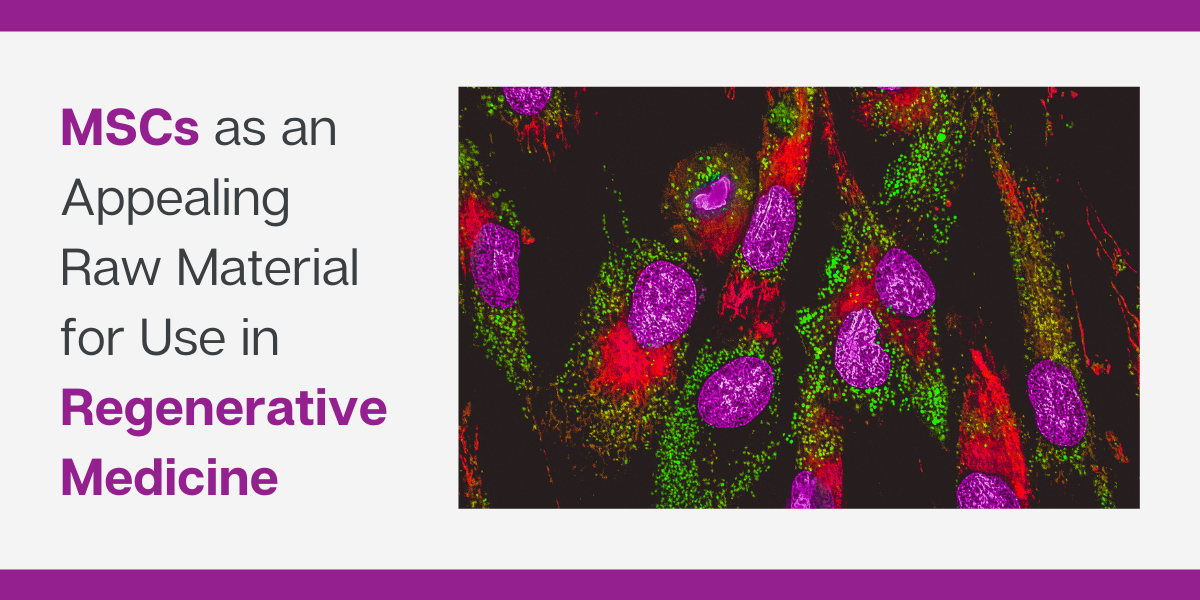
Mesenchymal stem cells (MSCs) are a type of non-controversial, adult cell. When manipulated within a laboratory, then can be differentiated into the specialized cells found in skeletal tissues, such as cartilage cells (chondrocytes), bone cells (osteoblasts), and fat cells (adipocytes). In contrast, stem cells derived from embryos are capable of developing into all the different types of cells found in our body, which makes them more versatile than MSCs, but also more controversial. Induced pluripotent stem cells also exhibit greater pluripotency, but as modified cells, they come with a greater set of regulatory challenges.

Therapeutic Potential of MSCs
MSCs were first described in 1991 and initially isolated from bone marrow (BM). Later, MSCs were successfully isolated from other tissues as well, including newborn umbilical cord blood (UCB), adipose tissue (AT), muscle, and dental pulp, to name a few. Because of their ability to modulate immunological responses, support hematopoiesis, and repair tissue, MSCs have been extensively tested to treat immune-based disorders, such as Crohn’s disease, rheumatoid arthritis, diabetes, and multiple sclerosis (MS).
MSCs have a distinctive capacity to survey damaged tissue and to respond by modulating the immune system and turning off inflammation. MSCs are also capable of producing trophic factors, such as cytokines and other bioactive molecules, in order to restore bodily structure and function.
Meaning, their therapeutic potency lies in their ability to communicate with other specialized cells.
Clinical Challenges of MSCs
Although mesenchymal stem cells (MSCs) have been explored within clinical trials since 1995, the outcomes of these studies have often fallen short of expectations, despite encouraging pre-clinical animal data collected across a wide array of disease models. Most clinical trial failures have been caused by important biological and pharmacological disparities in pre-clinical research and human translational studies. To overcome these challenges, some researchers are now exploring engineered MSCs and applications of MSC-derived exosomes.
The first MSC-based cell therapy product was approved in 2010 in South Korea. At present, only 12 MSC products globally have achieved marketing approval, including 11 full approvals and one recent Conditional Approval in China in January 2025. Only one of those products is approved for use within the United States, Mesoblast’s Ryoncil, which recevied FDA approval on December 18, 2024. There was also a 13th approval, which was Alofisel’s 2018 approval by the European EMA, but it was withdrawn in December 2024.
The efforts of scientists, researchers, and life science companies have also resulted in the development 17 MSC-based approved bone matrices for commercial use and 20 topical cosmetics containing MSCs and MSC-derived exosomes.
As mentioned, suboptimal outcomes in clinical trials have led some MSC researchers to focus on MSC-derived exosomes. When MSCs are administered to replace damaged or lost cells in tissue, they are cleared from the body relatively quickly. Thus, the therapeutic effects which are observed appear to be largely mediated by the exosomes secreted by the MSCs. These exosomes deliver cytokines, proteins, lipids, and nucleic acid fragments to the recipient tissue, driving the observed benefits. As of January 10, 2025, ClinicalTrials.gov lists 429 ongoing clinical trials investigating exosomes from various cell sources, with 45 of these specifically focusing on MSC-derived exosomes (Search term: Mesenchymal Stem Cell Derived Exosomes).
MSCs Clinical Trials
Among the 1,715 MSC clinical trials reported by ClinicalTrials.gov, the majority of studies are using adipose-derived MSCs and bone marrow-derived MSCs. Interestingly, nearly 75% of these clinical studies are using MSCs for the development of regenerative medicine products. Approximately 14% of the studies are using MSCs for disease modeling. The remaining 11% of the studies are using MSCs for drug discovery and cytotoxicity testing applications. To date, PubMed.gov has also recorded an astounding 108,312 scientific papers about MSCs.
Because MSCs prefer to differentiate into chondrocytes, osteocytes and adipocytes, most of the studies target musculoskeletal diseases, such as arthritis. The other major indications being treated with MSCs include spinal cord injuries, cardiovascular diseases, and critical limb ischemia (CLI).
Conclusions
To summarize, MSCs have several fascinating properties, including their immunomodulatory effects, differentiation potential, and ability to repair damaged tissues, combined with their easy availability from different sources. These traits have prompted scientists and researchers to investigate MSCs as an appealing raw material for use in cell therapy, gene therapy and tissue engineering applications—the three pillars of regenerative medicine.
These advances are ushering in an exciting new era for MSC-based regenerative medicine, with strong potential for clinical translation of emerging technologies.
Such technologies include the bioengineering of MSCs to allow them to perform targeted functions, using MSC-derived exosomes instead of whole cells, and the use of MSCs in large numbers within the emerging clean meat industry. MSCs are being used within cultured meat production due to their abundance, role during in muscle development, and multilineage differentiation potential. As such, lab-grown meat is fast becoming a compelling alternative to its farm-grown counterpart as investors notice the trillion dollar potential that cellular agriculture represents.

Tell Us What You Think!