|
|
Lab-grown meat, now more commonly referred to as cultivated meat, cell-cultured meat, or cellular agriculture, has evolved from a speculative biotechnology concept into an emerging commercial sector attracting investors, biotechnology companies, food industry leaders, and researchers worldwide.

Produced by expanding animal cells from species such as cattle, pigs, chicken, fish, and other livestock within controlled bioreactor environments, cultivated meat has the potential to reshape portions of the global protein market. Rather than raising and slaughtering animals, cultivated meat companies use cellular agriculture techniques to produce animal-derived tissues directly from cells.
The industry’s early development attracted some of the world’s most prominent entrepreneurs and investors. Bill Gates, Richard Branson, and other technology and business leaders invested in cultivated meat companies because of the technology’s potential to address challenges related to food security, sustainability, resource consumption, and global protein demand.
One of the earliest companies to gain widespread attention was Memphis Meats, a Silicon Valley startup founded in 2015 that produced some of the world’s first cultivated meat demonstrations, including cultivated meatballs, chicken, and duck products. The company attracted investment from prominent backers including Bill Gates, Richard Branson, Tyson Foods, Cargill, DFJ, and Atomico. Memphis Meats later changed its name to UPSIDE Foods as it transitioned from research and development toward commercial production.
Other early leaders in the field included Mosa Meat in the Netherlands, Modern Meadow in the United States, SuperMeat in Israel, BlueNalu in the United States, Finless Foods in the United States, Meatable in the Netherlands, Aleph Farms in Israel, and Vow in Australia.
The competitive landscape has changed substantially since the early years of the industry. While dozens of companies entered the field between 2015 and 2022, market leadership has increasingly concentrated among companies with regulatory progress, proprietary cell culture technologies, manufacturing capabilities, and access to sufficient capital.
Billion-Dollar Investments and the Rise of Cellular Agriculture
The cultivated meat industry received billions of dollars in cumulative investment during its first wave of growth. Investors were attracted by the possibility of creating an entirely new category of food production using technologies derived from biotechnology, stem cell research, tissue engineering, and regenerative medicine.
One of the most prominent investors in the sector has been Dr. Rick Klausner, the former director of the U.S. National Cancer Institute and former Executive Director of Global Health at the Bill & Melinda Gates Foundation. Klausner became an early investor in Meatable, a Dutch cultivated meat company using induced pluripotent stem cell (iPSC) technology to develop cultivated pork and beef products.
Meatable raised significant funding to advance its proprietary opti-ox technology, which enables rapid differentiation of pluripotent stem cells into muscle and fat cells. In 2021, the company announced a $47 million Series A financing round, bringing its total funding at that time to approximately $60 million. The company has continued advancing pilot-scale manufacturing and commercialization efforts.
Other companies have pursued different approaches to cultivated meat production. Aleph Farms has focused on cultivated beef products, including structured steaks. Vow has pursued cultivated meat from diverse animal species and premium culinary applications. Wildtype has focused on cultivated seafood, particularly salmon, while BlueNalu has also targeted the seafood market.
The investment environment changed significantly by 2025 and 2026. Early investors were primarily interested in proving that cultivated meat could be produced from animal cells. Current investors are increasingly focused on whether companies can achieve cost-efficient manufacturing, secure regulatory approvals, and build commercially viable businesses.
The industry has therefore entered a consolidation phase. Companies are increasingly pursuing strategic partnerships, licensing opportunities, acquisitions, and shared manufacturing infrastructure rather than simply raising capital to build independent facilities.
Leading Competitors in Cultivated Meat Production
The competitive landscape for cultivated meat has changed considerably since the industry’s early years. While many startups entered the market during the initial wave of enthusiasm, the strongest competitors in 2026 are companies with differentiated technology platforms, regulatory progress, manufacturing capabilities, and access to capital.
Table. Leading Competitors in Cultivated Meat Production
| Company | Headquarters | Founded | Technology Focus |
|---|---|---|---|
| UPSIDE Foods | California, U.S. | 2015 | Cultivated chicken and other meat products using proprietary animal cell culture platforms |
| GOOD Meat (Eat Just) | California, U.S. | 2011 | Cultivated chicken products using animal cell culture technology; first company globally approved for cultivated meat sales |
| Mosa Meat | Maastricht, Netherlands | 2013 | Cultivated beef using bovine cell culture and tissue engineering approaches |
| Aleph Farms | Israel | 2017 | Cultivated beef, including structured steak products using bovine cell technologies |
| Believer Meats (formerly Future Meat Technologies) | Israel | 2018 | Large-scale cultivated meat manufacturing platforms focused on cost reduction and commercial production |
| Meatable | Delft, Netherlands | 2018 | Porcine and bovine induced pluripotent stem cell (iPSC)-derived cultivated meat using opti-ox differentiation technology |
| Vow | Sydney, Australia | 2015 | Cultivated meat from diverse animal species, including premium and novel cultivated products |
| Wildtype | California, U.S. | 2016 | Cultivated seafood, particularly salmon, using fish cell culture technologies |
| BlueNalu | California, U.S. | 2017 | Cultivated seafood products developed through cellular agriculture |
| SuperMeat | Israel | 2015 | Cultivated chicken using proprietary avian cell culture technologies |
| Mission Barns | California, U.S. | 2018 | Cultivated animal fat technology for hybrid and alternative meat applications |
| BioBetter | Israel | 2015 | Biomanufacturing platforms supporting production of proteins and growth factors for cellular agriculture |
| Gourmey | France | 2019 | Cultivated foie gras and premium cultivated animal products |
| Liberation Labs | Indiana, U.S. | 2021 | Large-scale biomanufacturing infrastructure supporting cultivated food companies |
| Integriculture / Shojinmeat | Japan | 2015 | Open-source cellular agriculture platforms and cultivated meat technologies |
Beyond companies developing finished cultivated meat products, a parallel ecosystem of enabling technology providers has emerged. These companies supply critical inputs including growth factors, culture media components, analytical tools, bioreactor systems, and scalable cell manufacturing technologies.
This creates potential opportunities for companies with expertise in regenerative medicine manufacturing, particularly those experienced in iPSC expansion, differentiation protocols, and large-scale cell culture.
Leveraging iPSC Technology for Cultivated Meat Production
One of the most interesting intersections between regenerative medicine and cellular agriculture is the use of induced pluripotent stem cell technology.
Since the discovery of iPSCs by Shinya Yamanaka and John Gurdon, this technology has transformed biomedical research by enabling scientists to reprogram mature cells into pluripotent cells capable of differentiating into multiple cell types. iPSCs have become important tools for disease modeling, drug discovery, regenerative medicine research, and cell therapy development.
The same biological principles that allow researchers to generate specialized human cells for therapeutic applications can also be applied to food production. In cultivated meat, pluripotent stem cells can potentially provide a renewable source of animal cells capable of producing muscle tissue, fat, and other components required for meat products.
Companies such as Meatable have specifically explored pluripotent stem cell approaches, while other companies have developed proprietary animal cell lines and cell expansion technologies.
This creates a potential opportunity for companies specializing in industrial-scale cell manufacturing technologies. Organizations with expertise in bioreactor systems, cell expansion, growth media, and manufacturing processes developed for regenerative medicine may eventually find applications within cellular agriculture.
Companies with relevant expertise include FUJIFILM Cellular Dynamics and other organizations developing scalable cell production technologies.
However, cultivated meat manufacturing presents unique challenges compared with therapeutic cell manufacturing. Food production requires extremely high-volume manufacturing at dramatically lower cost points than pharmaceutical applications. As a result, cultivated meat companies must optimize for affordability, scalability, and food-grade production rather than clinical-grade manufacturing alone.
Regulatory Progress within the Global Cultivated Meat Market
For many years, cultivated meat remained limited to laboratory demonstrations because no products had received regulatory approval for commercial sale in major markets. This changed in 2023 when the U.S. Food and Drug Administration completed safety evaluations for cultivated chicken products from UPSIDE Foods and GOOD Meat, followed by USDA approvals allowing the companies to produce and sell cultivated chicken in the United States.
In June 2023, UPSIDE Foods and GOOD Meat became the first companies authorized to market cultivated meat products in the United States. UPSIDE Foods introduced its cultivated chicken product at a restaurant in San Francisco, while GOOD Meat introduced its product in Washington, D.C.
Unlike pharmaceutical cell therapies and gene therapies, cultivated meat is regulated as a food product through a coordinated framework involving both the FDA and USDA. The FDA evaluates the safety of cultivated animal cell materials, while USDA oversees production, processing, and labeling requirements.
By 2026, cultivated meat had achieved important regulatory milestones but remained in an early commercialization phase. The industry’s largest challenges had shifted from scientific feasibility toward manufacturing economics.
Early cultivated meat products were extremely expensive compared with conventional meat. The first cultivated hamburger developed by Mosa Meat in 2013 reportedly cost hundreds of thousands of dollars to produce, demonstrating the significant cost reductions required for commercialization. The long-term objective remains achieving cost competitiveness through improved cell lines, lower-cost culture media, optimized bioprocessing, and larger-scale manufacturing systems.
The Culture Meat Market Through 2032 (and Beyond)
While the cultivated meat is likely to eventually capture a meaningful share of the global protein industry, in the next near term (through 2032), BioInformant believes that adoption will initially remain concentrated in premium products and within specialized applications. Because the market size is currently small and in its early stages, this pattern of adoption is anticipated to produce exponential growth through 2032.
At its core, the global meat market represents one of the largest food categories in the world, making it an attractive target for biotechnology companies seeking disruption. However, achieving widespread adoption will depend on manufacturing costs, consumer acceptance, regulatory expansion, and the ability of companies to demonstrate consistent product quality.
Today, cultivated meat represents a convergence point between biotechnology, food science, and industrial manufacturing. The companies that succeed will likely be those capable of combining advanced cellular engineering with scalable production systems and commercially viable economics and strong marketing campaigns.
Don’t be left behind by the tidal wave that the cultured meat revolution represents.
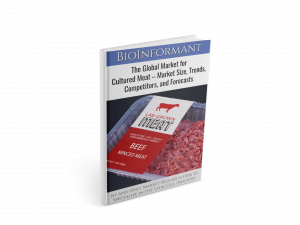
To learn more about the burgeoning field of cellular agriculture, view the “Global Market for Cultured Meat – Market Size, Trends, Competitors, and Forecasts.”
What are your thoughts on the clean meat industry? Leave them in comments below.
I think this is the most wonderful technology that will save millions and millions of animals suffering every year and will also help the planet and sustainability. I can’t wait for it to become available.
I see you don’t know about Boyalife. It has rhe biggest cloning factory in the world to provide chinese market with enough meat. They own ThermoGenesis Holdings, which has expertise in stem cells and CAR-T technologies.