|
|
Exosome research is experiencing rapid growth, driven by the increasing recognition of their critical role in intercellular communication and molecular transport. These extracellular vesicles act as natural carriers of proteins, lipids, and genetic material, influencing a wide range of physiological and pathological processes. As a result, they are emerging as a promising tool in regenerative medicine, drug delivery, and disease diagnostics.

Beyond their biological significance, exosomes are attracting attention for their potential therapeutic applications. Because they can mediate many of the beneficial effects traditionally associated with cells—without the same risks of immune rejection or uncontrolled proliferation—they are increasingly attracting attention and investment.
With this surge of interest, it is crucial to identify which institutions, researchers, and countries are leading the way in exosome-related scientific literature. Understanding the key players in this field provides valuable insights into where the most influential discoveries are occurring and which research groups are shaping the future.
Key Players in Exosome Research
For competitors within the exosome marketplace, it is vital to assess existing and future trends. One of the best tools for assessing scientific progress is to review rates of exosome research.
When exosome publications are analyzed, U.S. authors have published approximately 40% of the articles and Chinese authors take second place.
When the term “exosome” is searched within scientific literature, Dr. Susanne Gabrielsson from the Karolinska Institutet in Sweden is the leading author, with 37 articles, making her one of the global authorities on exosome research. A full list of Dr. Gabrielsson’s exosome publications can be viewed at this link.
When the term “extracellular vesicles” is searched, Unicyte AG, a regenerative medicine unit of Fresenius Medical Care, takes the lead. Headquartered in Switzerland, the company has published more than 100 papers on exosomes and extracellular vesicles in combination with Prof. Giovanni Camussi. The company is also a market leader in terms of patents and translational programs.
Leading Exosome Journals
Interestingly, two scientific journals have been particularly favorable toward exosome publications, publishing the greatest quantity to date:
PLoS ONE: PloS ONE, a peer-reviewed open access scientific journal published by the Public Library of Science, has published 349 articles with the term “exosome” or “exosomes” in the title. A full list of the articles can be viewed here.
Journal of Biological Chemistry: The Journal of Biological Chemistry, a weekly peer-reviewed scientific journal published by the American Society for Biochemistry and Molecular Biology, has published 167 articles with the term “exosome” or “exosomes” in the title. A full list of the articles can be viewed here.
Google Trend data also shows a clear increase in interest in exosome-related topics beginning in early 2022, as shown in the graphic below.
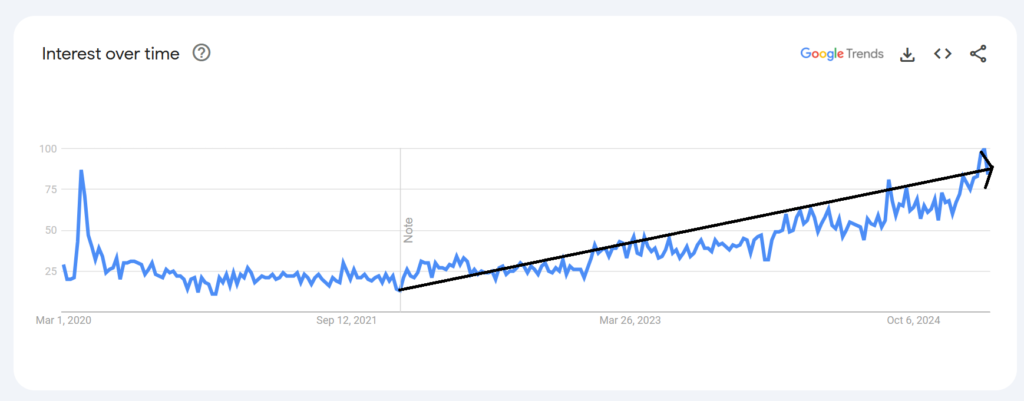
To summarize the findings above, Google Trends data also shows that interest in “exosomes” within the U.S. has experienced periodic fluctuations with an overall upward trajectory since January of 2022. While there have been occasional peaks, likely driven by emerging research, media coverage, or technological breakthroughs, the general trend suggests growing curiosity and engagement with the topic. This aligns with increasing recognition of exosomes’ potential in regenerative medicine, diagnostics, and drug delivery.
To compete for dominance within this market, it is essential to identify trends as they begin to impact the marketplace, not after they are in full effect.
To learn more about this expanding market, view the “Global Exosome Market – Market Size, Forecast, Trials and Trends.”

I have foot neuropathy and have tried numerous protocols to repair and none have been effective e.g. acupuncture, chiro adjustments, messauge, laser, parson muscle, decompression, etc.
Does regen med( stem cell, Prolo ther, Blood type etc) work and can you refer to a competent doctor? Approximate cost, etc.
I live in Huntington Beach, Ca