We have released coverage of this week’s stem cell industry activity that I am excited to share with you. It was a major week for stem cells, with CDI launching Opsis Therapeutics, Provia Laboratories expanding its stem cell product portfolio, CCBC getting a FDA Biologics License for CLEVECORD™, STEMCELL Technologies exploring genomic instability in an upcoming webinar, and iPSCs turning 10. [Read more…]
Provia Laboratories™ Expands its Stem Cell Portfolio to Amniotic Fluid, Chorionic Villi, and Placenta
Provia Laboratories, a leader in cGMP stem cell processing, banking and manufacturing, executed an agreement to license Biocell Group’s technology for processing stem cells from Amniotic Fluid, Chorionic Villi, and Placenta for the US and Asian markets.
Cellular Dynamics International (CDI) Launches Opsis Therapeutics to Develop Cell Therapies for Retinal Diseases
MADISON, WIS, September 28, 2016 – Cellular Dynamics International, Inc. (CDI), a FUJIFILM company and the leading developer and manufacturer of induced pluripotent stem cell (iPSC) products, today announced a new venture, named Opsis Therapeutics. Formed on July 31, Opsis Therapeutics is focused on discovering and developing novel medicines to treat patients suffering from retinal diseases. [Read more…]
FDA Approves the Cleveland Cord Blood Center’s CLEVECORD™ for Stem Cell Transplants
CLEVELAND, Sept. 12, 2016 /PRNewswire-USNewswire/ — The U.S. Food and Drug Administration (FDA) has issued a biologics license to the Cleveland Cord Blood Center (CCBC) for CLEVECORD™, a stem cell product (HPC, Cord Blood) derived from umbilical cord blood. Under this license, CCBC is authorized to manufacture CLEVECORD, for use in unrelated hematopoietic cell transplantation in patients with disorders affecting the hematopoietic system such as leukemia, lymphoma and immune system disorders.
“Obtaining FDA licensure for CLEVECORD is reflective of the Cleveland Cord Blood Center’s dedication to meeting the highest quality standards in the industry for distribution of our cord blood products to transplant centers throughout the U.S. and around the world,” said Wouter Van’t Hof, the CCBC’s Cord Blood Bank Director. “The ability to meet such standards is indicative of the commitment of our organization to providing high quality transplant options to patient populations that are underserved in hematopoietic transplantation. It also stages the pursuit of new life-saving and life-enhancing research and product development opportunities.”
Top 10 iPSC Talks from Axiogenesis’ American User Symposium
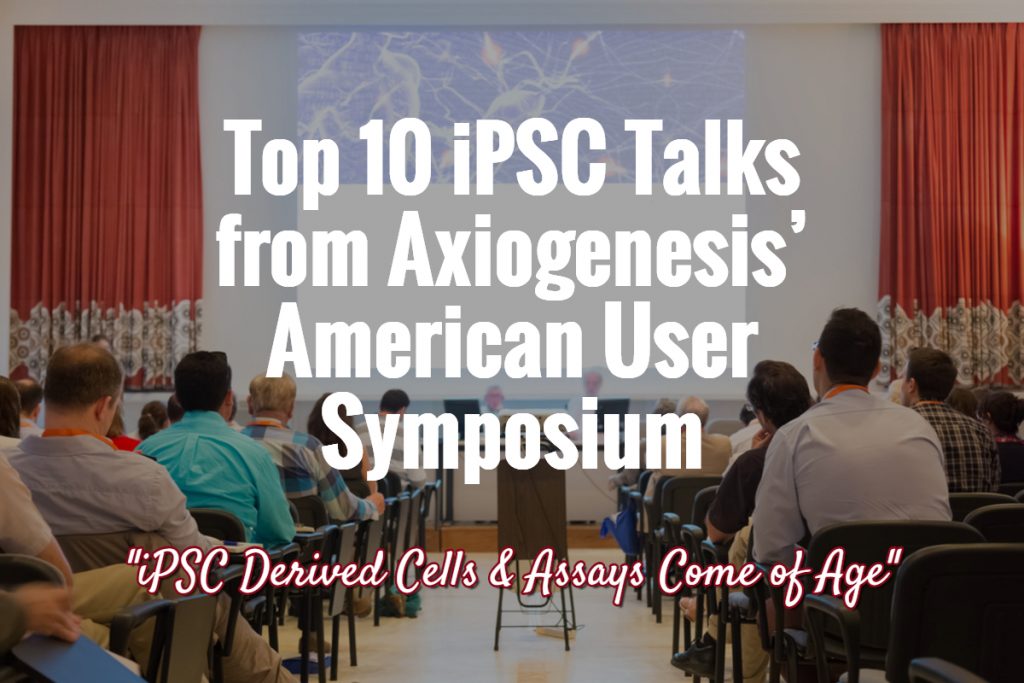
Axiogenesis hosted an American user symposium titled, “iPSC Derived Cells & Assays Come of Age.” Held in Boston, Massachusetts (June 13, 2016), the symposium explored how experts in the pharmaceutical industry and academia use Axiogenesis’ cells and assays within drug discovery, safety/toxicology screening, and bioengineering applications.
It also presented current approaches to establish and define standards for these cellular models. Widely attended by representatives from the pharmaceutical sector, symposium attendees had the valuable opportunity to view case studies of iPSC-derived cells utilized in drug development decision-making and biomedical research.
To capture highlights from the event and facilitate thought-provoking conversation, below is a list of the top 10 talks from the recent Axiogenesis’ iPSC user symposium. [Read more…]
- « Previous Page
- 1
- …
- 146
- 147
- 148
- 149
- 150
- …
- 201
- Next Page »