
Preserving the integrity and confidentiality of digital records related to stem cell research is paramount for laboratories worldwide. Stem cells hold tremendous potential for regenerative medicine and therapy, leading to groundbreaking advancements. [Read more…]
Cord Blood
Because cord blood present within a newborn’s umbilical is rich with stem cells, it can be collected and stored for future medical use.
Utilization of Umbilical Cord Blood in HSCT versus Regenerative Medicine
(Percentage Breakdown)
Since its first successful use more than three decades ago, umbilical cord blood has become an increasingly important source of stem cells for transplants for bone marrow failures, leukemia, lymphoma, sickle cell anemia, and other life-threatening diseases. Over 40,000 cord blood transplants have been performed worldwide for a wide variety of malignant and non-malignant disorders. The first successful cord blood stem cell transplant was performed in 1988 as a treatment for a 5-year-old boy with Fanconi Anemia; his newborn sister’s umbilical cord blood saved his life. Today, more than 80 diseases have FDA-approved cord blood stem cell transplant treatments. [Read more…]
European Commission Grants First Approval for Expanded Cord Blood Stem Cell Therapy (Zemcelpro®)
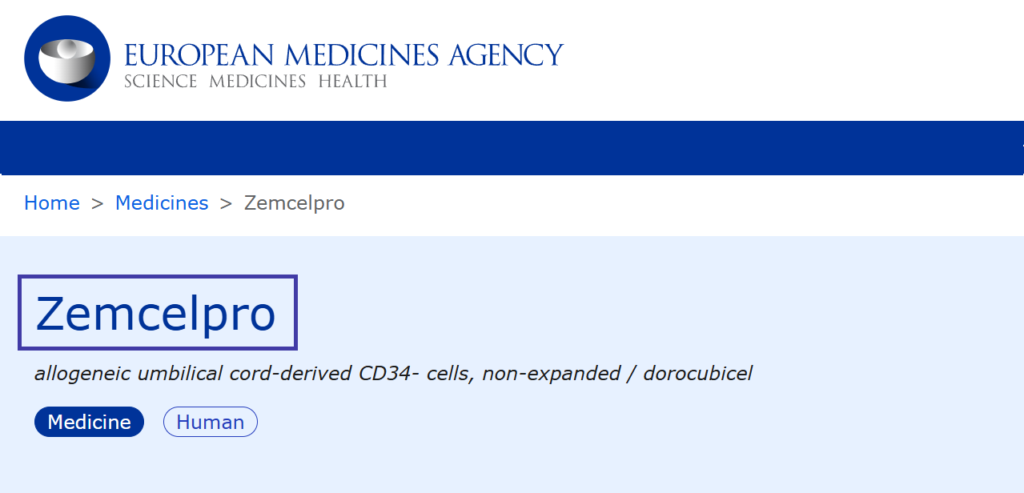
September 10, 2025 — In a landmark move for regenerative medicine, the European Commission has conditionally authorized Zemcelpro®, the first treatment in Europe to use expanded umbilical cord blood stem cells. Developed by Canadian biotech company ExCellThera, this therapy is only the second of its kind approved worldwide and represents a major advance in transplant options for patients with blood cancers such as leukemias and myelodysplastic syndromes. [Read more…]
Congress Moves to Reauthorize Funding for National Cord Blood and Bone Marrow Transplant Programs

Legislation would authorize $280 million over 5 years to support National Cord Blood and Bone Marrow Transplant Programs.
A bipartisan group of lawmakers in the U.S. House has introduced new legislation to extend funding for two cornerstone programs that connect patients with life-saving stem cell treatments. The Stem Cell Therapeutic and Research Reauthorization Act of 2025 proposes more than $280 million in federal funding over the next five years, ensuring that these initiatives continue past their current 2026 expiration date. [Read more…]
Market Forces Affecting the Cord Blood and Cord Tissue Industry
Recently released, the “Global Cord Blood & Tissue Banking Industry Report – Market Size, Segmentation, and Forecasts” explores clinical trial market data supporting applications for hematopoietic stem cells (HSCs) from cord blood and mesenchymal stem cells (MSCs) from cord tissue. Within this rapidly evolving marketplace, those who choose to commit to understanding current opportunities and threats will be positioned for a substantial strategic advantage.
Because the global cord blood banking industry has matured substantially over the past few years, new market forces have created both serious threats and novel opportunities. [Read more…]
- « Previous Page
- 1
- …
- 7
- 8
- 9
- 10
- 11
- …
- 62
- Next Page »