|
|
This interview features Dr. Philip Askenase, MD, a Professor of Medicine and Pathology at Yale University School of Medicine. A leading expert in the effector properties of exosomes, Dr. Askenase is now delving into the regenerative potential of mesenchymal stem cell (MSC)-derived exosomes.

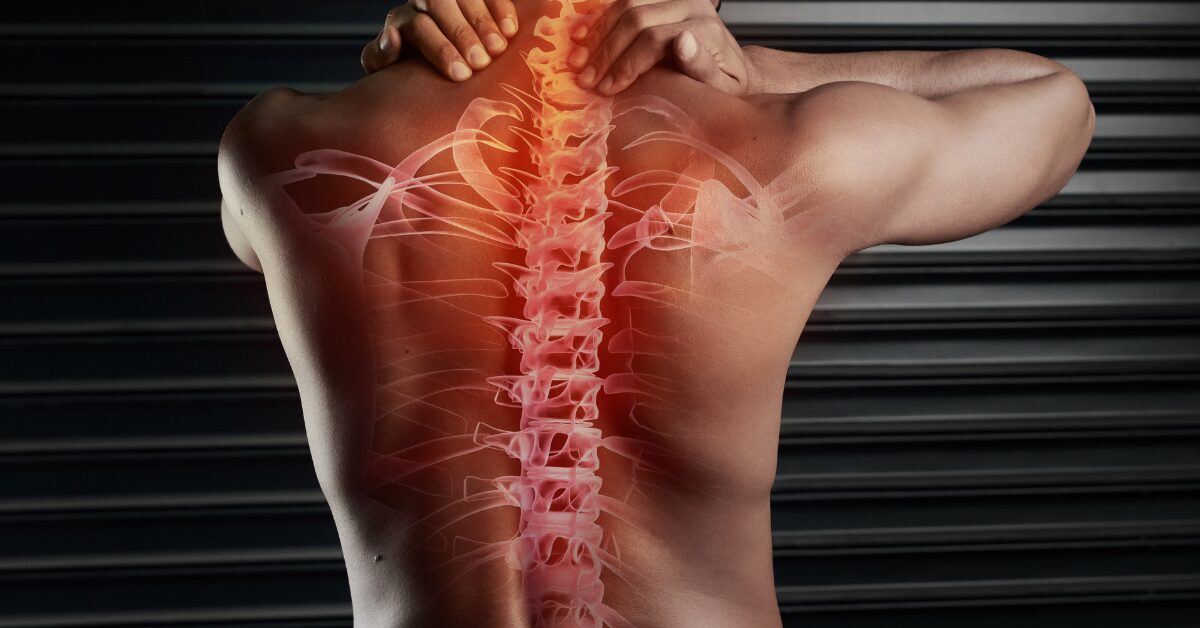
His latest, as-yet-unpublished research focuses on using MSC-derived exosomes to promote healing in injured spinal cords in rats. In our conversation, we examine the expanding significance of MSC-derived exosomes, their unique advantages, and diverse applications. We also discuss the market opportunities for stem cell exosomes and the companies driving innovation in this emerging field.
Interview with Dr. Philip Askenase on the Power of MSC-derived Exosomes

Cade Hildreth: What are MSC exosomes?
Philip Askenase: Exosomes are host-secreted endogenous nano vesicles that are about one-thousandth the size of cells and are present in all fluids. They are made in some form by all species through and including bacteria that produce analogous outer membrane vesicles (OMC).
The exosomes transfer RNAs and proteins, like signaling molecules, to other cells to then act epigenetically to alter the function of the targeted cells that can be near (paracrine like synapses) or far (endocrine) systemically via the blood.
MSC exosomes, or MSC-derived exosomes, are host-secreted endogenous nano vesicles derived from mesenchymal stem cells.
Cade Hildreth: What is your background and how did you become involve with MSC exosomes?
Philip Askenase: My background is in allergy and immunology. In a long study of an antigen-specific T cell suppressor factor, it that turned out to be antibody coated exosomes transferring the specific miRNA-150 for epigenetic changed function of targeted immune cells mediating their suppression.
Cade Hildreth: What is the importance of your research into the use of MSC exosomes for the treatment of spinal cord injury?
Philip Askenase: Working with collaborators at Yale (Drs. Jeff Kocsis and Karen Lankford) who are experts in spinal cord injury and treatment with the mesenchymal stem cells (MSC), we have found preliminarily that the MSC-derived exosomes seem as good as mesenchymal stem cells themselves in healing the injured spinal cord.
Cade Hildreth: What are the next steps for this research and why types of support would allow for further investigation?
Philip Askenase: To solidify this data at multiple levels and then go on to determine the mechanisms of the healing function of the exosomes, maximize production of exosomes by the MSC, identify the optimal dose and time course and route of administration, and move towards translating these studies into therapies that can be used in patients.
Cade Hildreth: What are the advantages of exosomes?
Philip Askenase: Exosomes have a wide range of advantages, as described below.
- Exosomes travel via systemic therapy: intravenous (IV) and intraperitoneal (IP)
- Exosomes travel via local therapy: inhalant to lungs, to CNS via the nasal cribriform plate for uptake by brain microglia , perhaps topical to eyes, intra articular, etc.
- Exosomes can cross the “Blood-Brain Barrier”
- An activated exosome subset can in vivo systemically deliver infinitesimal doses of miRNA (femtomoles)
- Activated exosomes can associate with a selected antigen-specific antibody coating and even a chosen miRNA cargo
- There is the potential for dual Ab targeting and miRNA functional specific exosome therapy
- Problems of artificial nano particles are solved by the physiologic exosomes that in contrast, are not perceived as foreign and taken up by the reticuloendothelial system, with therefore comparatively limited in vivo usefulness.
- The functions of the mesenchymal stem cell (MSC) secretome likely is entirely due to MSC-secreted exosomes
- Exosomes have no potential to trans-differentiate into other cells nor into malignant cells
- Exosomes are much easier to administer, store, and possibly even freeze dry
As mentioned previously, our work involves MSC-derived exosome therapy in spinal cord injury.
Cade Hildreth: Are there any applications for which MSCs would be better suited than MSC exosomes?
Philip Askenase: I can not think of many applications for which mesenchymal stem cells (MSCs) would be better than MSC exosomes.
Cade Hildreth: What do you think is the future market potential for MSC exosomes?
Philip Askenase: To assess the future market potential of MSC exosomes, start with market that is estimated for mesenchymal stem cells (MSCs). Then, increase it at lease 5-fold, because exosomes have greater efficacy, safety advantages, storage benefits, and other preferable attributes, as described above.
Cade Hildreth: What companies are currently working in this market area?
Philip Askenase: The following companies seem to be currently exploring or working with exosomes, as well as others not listed:
- Zenbio
- Blue Horizon
- Stemedica
- Celprogen
- Esperite
- Bio Cat
- Enforma
- Codiak BioSciences
- Others
Cade Hildreth: What are some of the thought leaders in the area of MSC exosomes (commercial or academic)?
Philip Askenase: The following publications and authors represent thought-leaders in the area of MSC exosomes:
- Xin H, Li Y, Buller B, Katakowski M, Zhang Y,Wang X, Shang X, Zhang ZG, Chopp M. Exosome-mediated transfer of miR-133b from multipotent mesenchymal stromal cells to neural cells contributes to neurite outgrowth. Stem Cells30(7):1556-64, 2012.
- Xin, H., Y. Li, Y. Cui, J. J. Yang, Z. G. Zhang and M. Chopp. Systemic administration of exosomes released from mesenchymal stromal cells promote functional recovery and neurovascular plasticity after stroke in rats. J Cereb Blood Flow Metab (2013)33(11): 1711-1715.
- Xin, H., Y. Li, Z. Liu, X. Wang, X. Shang, Y. Cui, Z. Gang Zhang and M. Chopp. Mir-133b Promotes Neural Plasticity and Functional Recovery after Treatment of Stroke with Multipotent Mesenchymal Stromal Cells in Rats Via Transfer of Exosome-Enriched Extracellular Particles. Stem Cells. (2013) DOI:10.1002/stem.1409.
- Camussi G, Deregibus MC, Bruno S, Grange C, Fonsato V, Tetta, C. Exosome/microvesicle-mediated epigenetic reprogramming of cells. Am J Cancer Res. 1: 98-110, 2011
- Camussi, G., M. C. Deregibus and V. Cantaluppi. “Role of stem-cell-derived microvesicles in the paracrine action of stem cells. Biochem Soc Trans(2013)41(1): 283-287.
- Camussi G, Deregibus MC, Tetta C. Paracrine/endocrine mechanism of stem cells on kidney repair: role of microvesicle-mediated transfer of genetic information. Curr Opin Nephrol Hypertens. 19:7-12, 2010.
- Lou G, Song X, Yang F, Wu S, Wang J, Chen Z, Liu Y. Exosomes derived from miR-122-modified adipose tissue-derived MSCs increase chemosensitivity of hepatocellular carcinoma. J Hematol Oncol. 2015 Oct 29;8(1):122. doi: 10.1186/s13045-015-0220-7.PMID: 26514126.
- Bryniarski K, Ptak , Jayakumar A, Püllmann K, Caplan M, Chairoungdua A, Lu J, Adams B, Sikora E, Nazimek K, Marquez S, Kleinstein SH, Sangwung P, Iwakiri Y, Delgato E, Redegeld F, Wojcikowski J, Wladyslawa Daniel A, Groot Kormelink T, and Askenase PW. Antibody light chain coated antigen specific exosomes deliver suppressor T cell-derived miRNA-150 to inhibit effector T cells. J Allergy Clin Immunol. 2013 jul;132(1):170-81. doi:10.1016/j.jaci.2013.04.048.
- KBryniarski, K. W. Ptak, E. Sikora, K. Nazimek, M. Szczepanik, M. Sanak and P.W. Askenase. 2015.. Free extracellular miRNA functionally targets cells by transfecting exosomes from their companion cells, PLoS One. 2015; 10(4): e0122991. doi: 10.1371/journal.pone.0122991.
- Karen Lankford, Jeffery Kocsis, Krzysztof Bryniarski, Katarzyna Nazimek and Philip W. Askenase. Contusive Spinal Cord Injury Rapidly Recovers As Well Following Intravenous Infusion of Bone Marrow Mesenchymal Stem Cell (MSC)-Derived exosomes or the MSC. ISEV SCI ABSTRACT 2016 Department of Neurology and Section of Allergy and Clinical Immunology, Department of Internal Medicine, Yale University School of Medicine, 333 Cedar Street, New Haven, CT 06520-8013, USA, Department of Immunology Jagiellonian University Medical College, Krakow, Poland.
Cade Hildreth: If people want to learn more about your or your research with MSC exosomes, how can they get in touch with you?
For individuals interested furthering their knowledge of MSC exosomes, please contact me at:
Philip W. Askenase, MD
Professor of Medicine and Pathology
Section of Allergy and Clinical Immunology
Department of Internal Medicine
Yale University School of Medicine
333 Cedar Street
New Haven, CT 06520, USA
Tel: 203-785-4170
Fax: 203-785-3229
[email protected]
Ready to learn more about this exciting market area? View the “The Global Exosome Market – Market Size, Forecast, Trials and Trends.”

Tell Us What You Think!