|
|
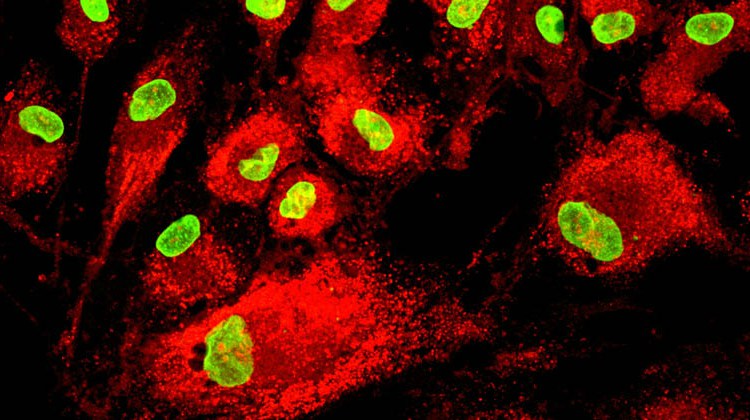
Mesenchymal stem cells (MSCs) are multipotent stem cells that can differentiate into a variety of cell types, including osteoblasts, chondrocytes, myocytes, and adipocytes. MSCs are of intense therapeutic interest, because they represent a population of cells with the potential to treat a range of acute and degenerative diseases. MSCs are advantageous over other stem cells types for a variety of reasons, including that they are immunoprivileged, making them an advantageous cell type for allogeneic transplantation.

Allogeneic means that cells from a donor are used in the treatment of a different person.
Overview of Mesenchymal Stem Cells (MSCs)
In addition to secreting factors that can stimulate tissue repair, MSCs can substantially alter their microenvironment, exerting effects that are both anti-inflammatory and anti-fibrotic. MSCs are also advantageous over other stem cells types, because they avoid the ethical issues that surround embryonic stem cell research and can positively impact immune function. Because of their unique capacity to form structural tissues, MSCs also being explored for use in 3D printing applications.
History of Mesenchymal Stem Cells (MSCs)
1900s
The discovery of mesenchymal stem cells (MSCs) dates back to the early 1900’s.
1924
In 1924, the Russian-born researcher Alexander Maximow used histology to identify a type of precursor cell within the mesenchyme that could differentiate into a variety of blood cell types.[1] While the term mesenchymal stem cell did not exist, this is the earliest known reference to the cell type.
1960s
Nearly 40 years later, in the 1960’s, researchers Ernest McCulloch and James Till identified the clonal qualities of marrow cells. [2],[3] It then took another decade until an ex vivo assay was developed that allowed for examination of the clonal nature of multipotent marrow cells.[4]
This assay was developed by Friedenstein’s team of researchers in the 1970’s, although the stromal cells of interest (now called mesenchymal stem cells) were referred as colony-forming unit-fibroblasts (CFU-f).[5]
1995
Although the first clinical trials of MSCs occurred in 1995, hundreds of clinical trials have since been initiated.[6]

2000
Interestingly, it took until the turn of the century (2000) for research supply companies to give enough credibility to the cell type to launch research tools that would support investigation of the cell type by the scientific community.
Later research and experimentation further characterized the plasticity of marrow cells and how their differentiation into mature cell types could be manipulated by environmental stimuli. For instance, growing marrow stromal cells in the presence of osteogenic stimuli, such as inorganic phosphate, ascorbic acid, dexamethasone, and related stimuli, can drive differentiation into osteoblasts (bone producing cells).
Similarly, the presence of transforming growth factor-best (TGF-b) has the ability to induce chondrogenic (cartilaginous) traits.
2020
The arrival of COVID-19 gave MSC research a new and urgent direction. Because MSCs can calm overactive immune responses, scientists began testing whether they could reduce the dangerous lung inflammation seen in severe COVID-19 cases. Some of these studies used the cells themselves, while others used exosomes, which are tiny vesicles that MSCs release to communicate with surrounding cells.[7]
2023
By 2023, the gap between MSC research activity and commercial success had become striking. More than 1,100 clinical trials involving MSCs had been registered around the world, yet only a dozen MSC products had received regulatory approval for sale. Asia led the way, accounting for nine of those twelve approvals, with South Korea approving the largest share.[8]
2024
In December 2024, the United States approved its first MSC therapy. The FDA cleared Ryoncil (remestemcel-L-rknd), a donor-derived therapy made from bone marrow MSCs, for children as young as 2 months old who have steroid-refractory acute graft-versus-host disease (SR-aGVHD). This condition can develop after a stem cell transplant, when immune cells from the donor turn against the patient’s own tissues and standard steroid treatment fails to control the attack. For a field that had spent decades moving from laboratory promise toward clinical practice, the decision was a landmark.[9]
2025–2026
Investment in late-stage MSC research remains strong. In January 2026, the Korean company MEDIPOST secured $140 million to fund Phase III trials of an MSC therapy derived from umbilical cord blood, aimed at treating knee osteoarthritis.[10] However, Ryoncil’s pediatric GVHD indication is still the only MSC use the FDA has approved. The agency has also warned patients about unapproved umbilical cord and placental products marketed by some clinics, which often lack viable cells and may pose infection risks.
FOOTNOTES:
[1] Wan C, He Q, McCaigue M, Marsh D, Li G (2006). “Nonadherent cell population of human marrow culture is a complementary source of mesenchymal stem cells (MSCs)”.Journal of Orthopaedic Research 24 (1): 21–8.
[2] Becker AJ, McCULLOCH EA, Till JE (1963). “Cytological Demonstration of the Clonal Nature of Spleen Colonies Derived from Transplanted Mouse Marrow Cells”. Nature 197(4866): 452–4.
[3] Siminovitch L, Mcculloch EA, Till JE (1963). “The distribution of colony-forming cells among spleen colonies”. Journal of Cellular and Comparative Physiology 62 (3): 327–36.
[4] Friedenstein AJ, Deriglasova UF, Kulagina NN, Panasuk AF, Rudakowa SF, Luriá EA, Ruadkow IA (1974). “Precursors for fibroblasts in different populations of hematopoietic cells as detected by the in vitro colony assay method”. Experimental hematology 2 (2): 83–9.
[5] Friedenstein AJ, Gorskaja JF, Kulagina NN (1976). “Fibroblast precursors in normal and irradiated mouse hematopoietic organs”. Experimental hematology 4 (5): 267–74.
[6] Wang S et al. (2012). “Clinical applications of mesenchymal stem cells”. Jour of Hematology and Oncology (19).
[7] Sengupta V, Sengupta S, Lazo A, Woods P, Nolan A, Bremer N (2020). “Exosomes derived from bone marrow mesenchymal stem cells as treatment for severe COVID-19”. Stem Cells and Development 29 (12): 747–54.
[8] Fernández-Garza LE, Barrera-Barrera SA, Barrera-Saldaña HA (2023). “Mesenchymal Stem Cell Therapies Approved by Regulatory Agencies around the World”. Pharmaceuticals 16 (9): 1334.
[9] U.S. Food and Drug Administration (2024). “FDA Approves First Mesenchymal Stromal Cell Therapy to Treat Steroid-refractory Acute Graft-versus-host Disease”. FDA News Release, December 2024.
[10] MEDIPOST (2026). Funding announcement for Phase III knee osteoarthritis trials. January 2026.

I fully agree with your text , as CEO of FatStem, a veterinary company in Europe, we used MSC for different diseases by Horses and Dogs with very good results and without complications.