
|
|
A clinical researcher reaches out at 11 PM because the lab workstation will not connect to the freezer monitoring system. A patient record is open on her second screen. Whoever takes that ticket needs to fix the issue without ever pulling unauthorized eyes onto protected health information. Healthcare carries the heaviest breach cost of any industry at $7.42 million per incident for the 14th year running, per IBM’s 2025 report. The tool a hospital or biotech firm picks for remote help shapes whether that midnight ticket stays a routine fix or becomes the next OCR investigation.

Key Takeaways
- Healthcare leads every sector on the price of a single breach, far ahead of finance, energy, and technology.
- HIPAA’s Security Rule lists five technical safeguards that govern every help session, not just the EHR itself.
- Four risk points dominate: EHR access by technicians, medical device support, lab and research workstation sessions, and BAA-covered vendor access.
- Evaluating vendors against compliance criteria up front reduces exposure faster than any after-the-fact audit.
- Other frameworks layer on top of HIPAA in many settings, including HITRUST, medical device cybersecurity rules from the FDA, and substance use disorder protections under 42 CFR Part 2.
Why Remote IT Support Is Different in Healthcare
Inside a hospital, biotech lab, or research clinic, remote IT support software for healthcare touches almost every regulated workflow: an electronic health record system, a sequencer connected to the lab network, a billing workstation that holds claim files, an infusion pump with embedded firmware, or a researcher’s laptop running clinical trial data. Each of those endpoints sits inside the scope of HIPAA, and several sit inside additional rules that go beyond it.
The data on the other side of a help session is not ordinary IT data. It is protected health information that triggers federal notification rules the moment it leaves an authorized boundary.
For broader context on how research-intensive healthcare organizations think about operational risk, the BioInformant blog tracks the regulatory and operational shifts shaping biotech and regenerative medicine companies, many of which face the same HIPAA exposure as traditional providers.
The HIPAA Requirements That Apply to Every Remote Session
The Security Rule at 45 CFR 164.312 names five technical safeguards. Each one applies to a support session as much as to the underlying clinical application.
- Access control: unique user IDs, automatic logoff, and emergency access procedures. A shared technician account is a finding waiting to happen.
- Audit controls: every session that touches ePHI must be logged in a way that can be reviewed and produced for OCR.
- Integrity: the data viewed or transferred during a session cannot be altered without detection.
- Person or entity authentication: the technician and the end user both need verified identities, not shared passwords.
- Transmission security: encryption in transit, integrity controls, and a documented breach response if something fails.
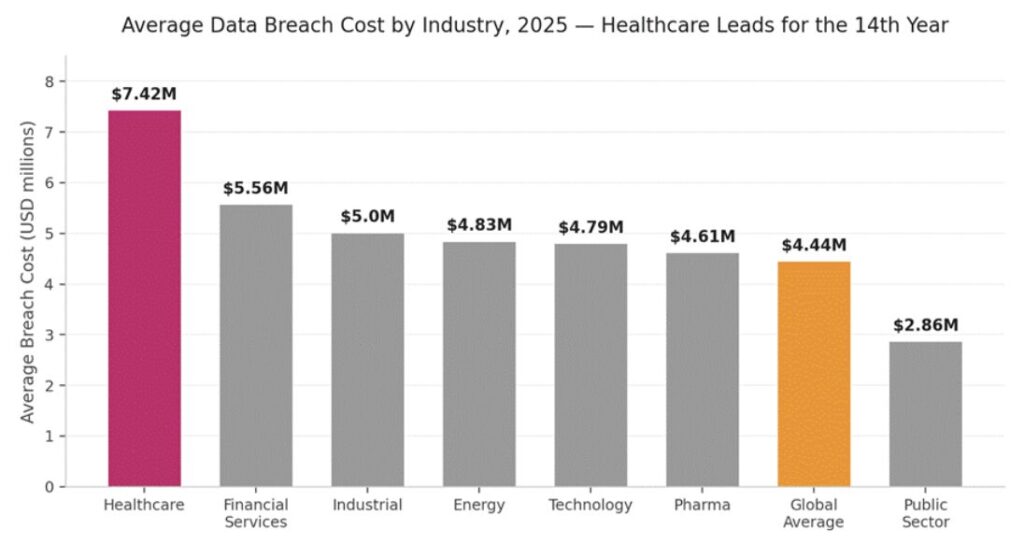
That headline figure reflects the full chain of consequences: regulatory fines, breach notification, lost business, and the operational cost of recovery, which now takes a median of 241 days to identify and contain. The financial sector sits second at $5.56 million, with most other industries clustered below the $5 million mark.
Four Critical Risk Points in Healthcare Remote Support
Most healthcare organizations already use some form of remote help tool. The risks usually come from how it is deployed inside specific clinical and research workflows.
EHR access by support technicians
When a clinician submits a ticket about a frozen EHR session, a technician may take control of a screen showing patient charts. Without screen masking, time-bound sessions, and full audit logging, that one ticket can put thousands of records into view.
Medical device and lab equipment support
Imaging systems, infusion pumps, sequencers, and freezer monitors increasingly sit on the same network as patient data. Vendor technicians who service them need access that does not become a back door into the wider clinical environment.
Research workstation access
Clinical trial laptops and lab analysis machines often hold de-identified but re-identifiable data. A poorly governed support session on one of these endpoints can trigger both HIPAA notification and clinical trial integrity questions.
BAA-covered vendor sessions
Every outside IT firm, MSP, or device vendor that touches systems with ePHI needs a Business Associate Agreement. The remote tool itself usually needs one too. Without it, every session is an unenforced contract.
| Compliance tip: Pull a 30 day report of every remote session that touched a clinical or research system, including who initiated it, whether MFA was enforced, and what was transferred. If your current tool cannot produce that report on demand, the gap is already a finding under the OCR risk analysis enforcement initiative. |
A Compliance-First Vendor Evaluation Checklist
Most vendor pitches focus on features. A healthcare buyer needs a different filter. The table below maps the seven criteria that should drive a shortlist.
Criterion |
What to Verify |
Why It Matters |
| BAA availability | Vendor signs without negotiation | Required for HIPAA business associate status |
| End to end encryption | TLS plus 256-bit AES at minimum | Transmission security under 164.312(e) |
| MFA enforcement | Mandatory, not optional | Access control under 164.312(a) |
| Session recording | Every regulated session, with secure storage | Audit controls under 164.312(b) |
| Granular role permissions | Per technician, per endpoint, per session | Limits blast radius of compromised accounts |
| Independent audits | Current SOC 2 Type II and HITRUST | Evidence of operational maturity |
| Breach notification SLA | Documented in contract, matches HIPAA timeline | Avoids gap in 60-day notification window |
Beyond HIPAA: Other Frameworks That Touch Remote Support
HIPAA is the floor, not the ceiling. Several adjacent frameworks add specific obligations that show up in support tool decisions.
- HITRUST CSF: a healthcare-specific control framework that many payers and integrated delivery networks now require of their vendors.
- Part 2 of Title 42 in the federal regulations: stricter rules covering substance use disorder records. Disclosure rules are tighter than HIPAA itself.
- FDA medical device cybersecurity: applies to vendors who service connected devices and the hospital teams that maintain them.
- State privacy laws: California CCPA, Texas TMRPA, and similar regimes can apply to research data and patient data simultaneously.
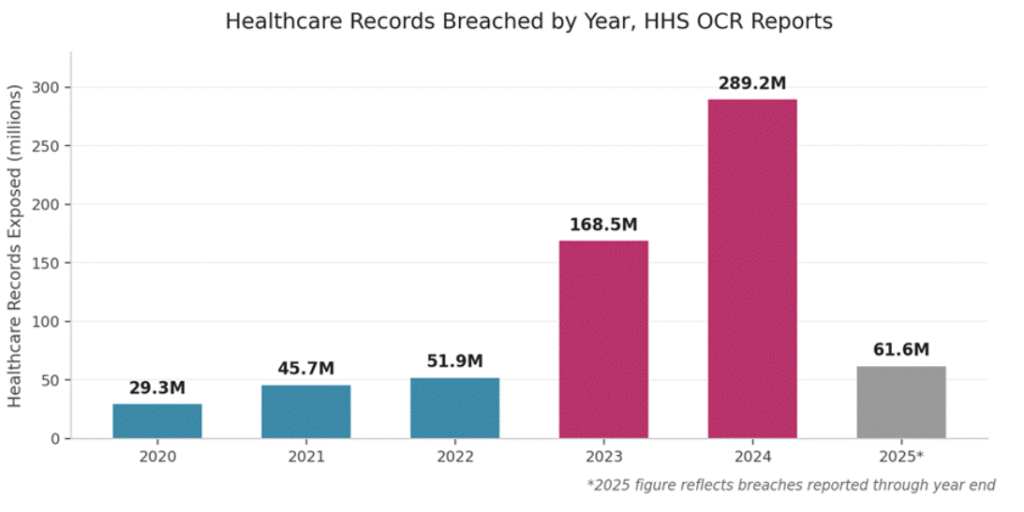
The volume of exposed records reached an all-time high in 2024 with 289 million records breached, driven heavily by the Change Healthcare incident affecting 192.7 million individuals. For a deeper technical reference on the layered controls that should surround any clinical environment, the healthcare security overview outlines identity, segmentation, and endpoint controls that complement HIPAA’s baseline. Public breach data is also tracked openly in the HHS OCR breach reporting portal for any organization that wants to benchmark against peers.
Implementation Roadmap
A phased rollout limits operational risk during the transition and lines up with how OCR expects organizations to demonstrate due diligence.
- Inventory every endpoint that holds or touches ePHI, including clinical, administrative, and research systems.
- Tier endpoints by sensitivity, with EHR, billing, and lab data systems in the highest tier.
- Pilot the chosen tool with one team, usually the central IT help desk, for four to six weeks.
- Wire up SSO, mandatory MFA, session recording, and ticketing integration before going wider.
- Roll out across the organization with documented training for technicians and clinicians.
- Run a quarterly tabletop exercise covering a compromised technician scenario, including legal and compliance leads.
FAQs
What counts as a remote IT support tool in a healthcare setting?
Any tool that lets a technician view, control, transfer files to, or patch a colleague or clinician device from elsewhere. It covers help desk sessions, MSP coverage of clinical systems, vendor service on medical devices, and after-hours maintenance on research workstations.
Does HIPAA require a signed BAA with the support tool vendor?
Yes, in almost every case. If the vendor’s platform creates, receives, maintains, or transmits ePHI on the covered entity’s behalf, a business associate contract is required under 45 CFR 164.504(e). Vendors that refuse to sign should be excluded from the shortlist.
How does encryption fit into HIPAA’s technical safeguards?
Encryption is an addressable specification under the Security Rule, which in practice means it is essentially required. Properly encrypted ePHI can also fall outside the Breach Notification Rule’s reporting obligation if a device is lost or stolen.
What is the OCR enforcement initiative focused on risk analysis?
OCR launched this enforcement push in October 2024 because risk analysis failures are the most common HIPAA Security Rule violation. Organizations should document a comprehensive review that covers every system holding ePHI, including the remote support tool itself.
Are research-only environments outside HIPAA?
Sometimes, but rarely cleanly. Research data tied to identifiable patients, or data that can be re-identified, usually falls inside HIPAA. Biotech and clinical research firms often face the same support tool requirements as traditional providers.
What is the single most important control to put in place first?
Mandatory phishing-resistant MFA on every technician account, with no exceptions for vendors. Stolen credentials remain the single largest initial access vector in healthcare breaches, and one compromised support account can reach hundreds of clinical systems in minutes.
Conclusion
No other industry pays as much per breach, takes as long to detect intrusions, or works under as strict a regulatory framework around patient data as healthcare does. Whichever platform a hospital, biotech firm, or research clinic adopts to handle remote help tickets becomes a meaningful piece of that picture. Paired with documented controls and a quarterly review cadence, the right choice becomes invisible infrastructure that supports both compliance and care delivery.
For more on how scientific and regenerative medicine organizations are responding to operational and regulatory pressure, BioInformant’s coverage of the stem cell and regenerative medicine landscape offers useful background reading for leaders shaping their next compliance roadmap.
References
IBM, Cost of a Data Breach Report 2025 — https://www.ibm.com/reports/data-breach
HHS Office for Civil Rights, Breach Portal — https://ocrportal.hhs.gov/ocr/breach/breach_report.jsf
HIPAA Journal, 2025 Healthcare Data Breach Report — https://www.hipaajournal.com/2025-healthcare-data-breach-report/
U.S. Department of Health and Human Services, HIPAA Security Rule 45 CFR 164.312 — https://www.law.cornell.edu/cfr/text/45/164.312
Splashtop, Remote Support Product Overview — https://www.splashtop.com/products/remote-support
Disclaimer: While every reasonable effort was made to ensure accuracy and completeness, this article may contain errors, omissions, or information that has since become outdated, and it should not be treated as a substitute for professional, legal, technical, or expert advice. Readers are encouraged to consult the original sources and exercise their own judgment before relying on this content for decisions of consequence.

Tell Us What You Think!