|
|
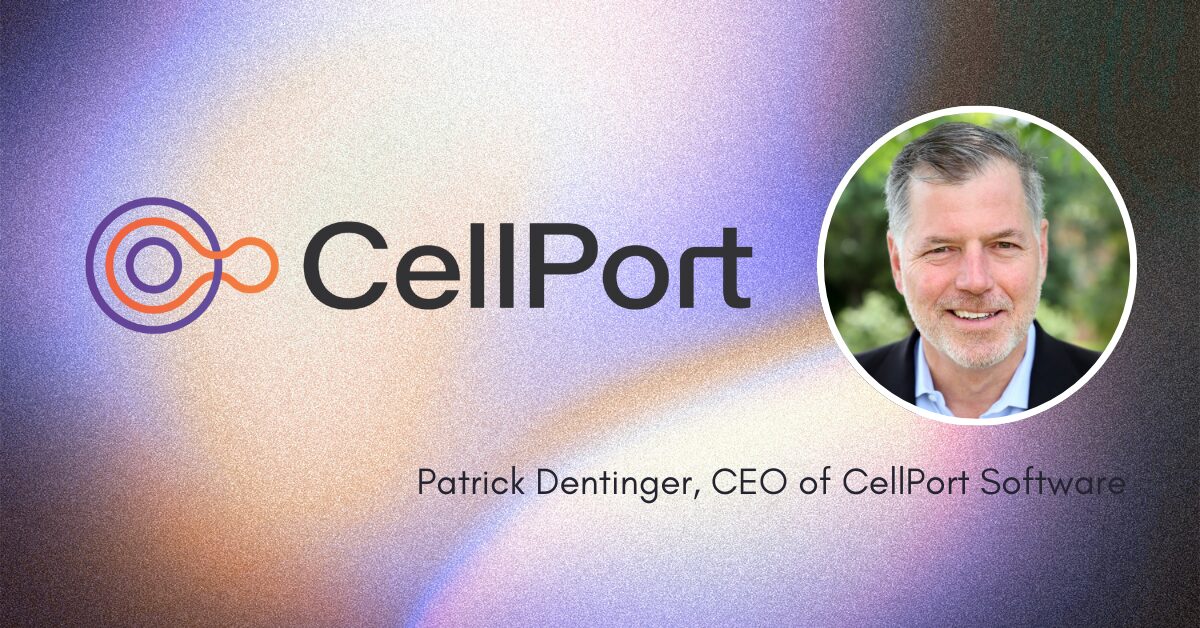
In the dynamic world of cell therapy, where precision and reproducibility are paramount, one scientist’s frustration with cell unpredictability sparked an industry-changing innovation. After years at the bench wrestling with the inherent variability of cell culture, Patrick Dentinger recognized a deeper problem—labs weren’t equipped with the right tools to track, understand, and manage cellular drift.

Rather than fighting the chaos, they leveraged it, founding CellPort Software to bring structure, transparency, and real-time insights into cell-based operations. In this interview, we explore the journey from scientist to entrepreneur, the challenges of lab digitalization, and how CellPort is revolutionizing the way biotech companies interact with living systems. Enjoy!
Cade Hildreth: What is your professional background and what led you to found the company?
“Cells, Drift, and the Art of Letting Smarter People Figure It Out”

Patrick Dentinger: I started out as a bench scientist, like a lot of people in biotech. Spent a few years pipetting, culturing cells, and convincing myself I was on the cutting edge of something big. But it didn’t take long for me to realize a harsh truth—I didn’t have the patience for the bench. I couldn’t persuade the cells to behave. I couldn’t get formulations to cooperate. Half of the time, it felt like the cells were laughing at me and the other half they clearly were not listening to me…although it did prepare me for having daughters.
But here’s the thing—those years at the bench gave me a front-row seat to a massive disconnect: what was happening inside the lab and what was being extrapolated outside the lab were often not aligned. The reality? Science is messy. Cell culture is complicated and it can be unpredictable. But in a world of limited budgets, tight timelines, and impatient investors, companies operate in a state of “just enough.” Just enough data. Just enough controls. Just enough validation. Just enough to keep moving forward. And when things don’t go as planned? The pressure builds.
Since I couldn’t convince cells to do what I wanted, I started thinking about it differently. Maybe the problem wasn’t that cells were unpredictable—it was that we weren’t equipped to properly track and understand that unpredictability. What if, instead of fighting variability, we acknowledged it? What if we had better ways to quickly detect when cells were drifting? Or at the very least, what if we actually captured what we were doing in a way that made it possible to go back and figure out where things went sideways?
That led to two big ideas:
- Better analytical tools to detect drift and its causes
- Better transparency and traceability—so we could actually track what was happening, even when we didn’t fully understand it yet.
Between the two, the second was the easier starting point. You can’t fix what you don’t record. And if you’re recording everything in a structured, organized way, the people who are way smarter than I—the ones developing cutting-edge analytical tools—can take it from there. That’s where CellPort came in, a platform designed to efficiently document every aspect of cell culture, ensuring that both current and future technologies can seamlessly integrate.
So, yeah. I stopped fighting the cells. They’re going do what they do. But at least now, we can listen better. And if that gets us even 10% closer to reproducibility, well, that’s better than where we started. So we started a company.
Cade Hildreth: Where did the idea for CellPort come from?
“Learning the Language of Cells—One Step at a Time”
Patrick Dentinger: We know cells are communicating with us. The challenge is that we don’t fully understand their language. But, like all science, we learn—slowly, incrementally. Each new discovery adds another piece to the puzzle.
One thing we do understand today is that cells drift. They change, they adapt, they respond to their environment in ways that are often subtle but deeply impactful. So what do we do with this knowledge? What if you could take a major step forward by building a tool that captures what we know now, in a structured, organized way?
And then, let’s take another step—making cell culture work easier. Right now, the process is clunky. People write notes on paper, they transcribe them into digital formats later, maybe a document, maybe a spreadsheet, and then those files get buried in a server somewhere. It’s inefficient, error-prone, and a huge time sink. If we can streamline that process, eliminate redundant documentation steps, and build a system where information is structured from the start, we might get another 10% boost in productivity and 90% reduction in manual transcription errors—just by making the work less cumbersome.
Cell culture has always been about observing, nurturing, and maintaining the delicate balance that keeps cells alive and functioning. I remember being trained in university to feed and wash cells, getting rid of the “waste” that accumulates in the medium. Who would have thought that in 2025, that very waste—what we used to discard without a second thought—would be considered liquid gold? Yet today, exosome research holds exciting potential.
That’s the nature of progress. Step by step, we refine our understanding. What seems insignificant today might be the foundation of tomorrow’s breakthrough. But to get there, we need better tools. Tools that don’t just store data but structure it, making every experiment, every observation, and every process part of a growing, connected body of knowledge.
Because the more we listen—the more we truly organize what we know—the closer we get to understanding what the cells have been trying to tell us all along.
Cade Hildreth: What finally inspired the creation of CellPort’s software?
“Have You Ever Sat through an FDA Audit?”
Patrick Dentinger: Have you ever sat through an FDA audit? It’s like being trapped in a Kafka novel, but with more binders.
Back in the early 2000s, we were running cell culture operations when the FDA introduced a game-changer—the Biopharmaceutics Classification System (BCS) biowaiver. Suddenly, cell- based assays could replace human bioequivalence studies for generic drugs. It was a radical, forward-thinking move. If we could prove that our cell-based tests were rock solid, we could help get hundreds of drugs to market faster, without unnecessary human trials.
Sounds great, right? Yeah, except for one little problem—the cells don’t care about your regulatory filings. They drift. They change. They misbehave. And the FDA? They care a lot about that.
So, there we were, drowning in paper—lab notebooks, Excel files, Word docs, and a whole lot of QC and QA oversight trying to hold everything together. Every audit felt like a scavenger hunt through a landfill of disjointed documentation. We needed to prove we had control over our cells over months of culturing, and the best we had was a system held together by spreadsheets and willpower.
That’s when it hit us—this was stupid.
Why were we relying on a documentation system that was so antiquated? Why weren’t we capturing everything digitally, in a structured, searchable, traceable way? If we could build a system that automated tracking, locked in an audit trail, and made everything accessible with a click of a mouse, we could stop wasting time proving we did things right and actually focus on doing things right.
And just like that, CellPort was born.
Not out of some grand vision. Not because we wanted to “revolutionize the industry.” No, we just got sick of the insanity of modern lab documentation. We built a tool that made sense—a system that tracks what happens in the lab, organizes it, and makes sure it’s all there when the FDA (or anyone else) comes knocking.
Because here’s the truth: Cells are going to drift. That’s biology. But how you track it, document it, and learn from it—that’s where the real control comes in. And if we can make that process suck less for scientists and management, well, that’s what CellPort is all about. So we built it.
Cade Hildreth: How long did it take you to build out this software and what unexpected steps or challenges were involved?
“Building CellPort: One Iteration at a Time”
Patrick Dentinger: This wasn’t a weekend project. It wasn’t even a year-long sprint. Building CellPort spanned years—a slow, deliberate process of refining, iterating, and adapting. Every step of the way, the goal was the same: make life easier for the people actually using it. Each version wasn’t about cramming in more features—it was about delivering real convenience, making the software work with scientists rather than against them.
The biggest challenge we faced was building software while running a contract lab at the same time.
Every day, we were handling customer projects, racing against deadlines, while also testing and improving the system. It was like remodeling a kitchen while still cooking dinner every night— messy, complicated, but necessary. Balancing the demands of innovation with the realities of daily lab operations meant we had to be ruthlessly practical. We focused on what actually mattered, not what looked good on a spec sheet.
Over time and after many customer audits, we realized this wasn’t just for our lab—it was for every lab struggling with the same chaos. That’s when CellPort stopped being just a tool and became the solution. Not because we set out to build a software company, but because the science demanded it.
Cade Hildreth: How does CellPort’s approach to laboratory information management and digital workflows set it apart from traditional LIMS and ELN solutions?
“Can We Minimize Stringing Management Systems Together?”
Patrick Dentinger: It is quite common to find software unique to the stage of work we’re in. Research? One system. Development? Another. Qualification? Something else. GMP? Oh, now we need a different one.
We know how we got here, but is there a better way?
Think about it: we don’t switch from Microsoft Word to Google Docs to LibreOffice to AbiWord every time we enter a different phase of writing. We just use one word processor. So why, when it comes to laboratory information management, are we stuck in this ridiculous cycle of jumping between an ELN, LIMS, MES, or whatever system has been inserted into the workflow?
The reason is simple: these systems are stage specific. They were built for specific tasks, in specific environments, on technology that—let’s be honest—was never envisioned to solve the entire process. And now, we’re stuck patching together systems that look and operate differently.
But let’s get real—when you step into a lab, no matter where you are in the process, you need materials, equipment, protocols, and people. That’s true in research. That’s true in GMP manufacturing. The only difference is how much detail you need to capture at each stage. So why not have one system that handles the whole thing?
That’s CellPort.
A single platform that flexes with you. Loose and adaptable for research. Rigid and compliant for GMP. And when you need it to integrate with other systems? No problem—it plays nice with others. But at its core, it’s the backbone of the entire cell’s journey, from the first experiment to full-scale manufacturing.
Cade Hildreth: Why did you decide to focus specifically on serving cell-based operations versus other life science applications?
“Why Cells? Because Cells Are the Show.”
Patrick Dentinger: Look, we could have built another generic laboratory platform. Slapped on some customization options, called it “flexible,” and moved on. But that’s not what the science needed. Cells needed their own platform.
We knew this because we lived it. Working with cells isn’t like managing reagent bottles or running PCR. Cells change—they drift, they adapt, they do things you don’t expect. Keeping them organized isn’t just about tracking an inventory list; it’s about understanding their lineage, their quirks, and how they respond to a million little environmental variables. And let’s not forget the human side of this—people leave, knowledge gets lost, and suddenly, nobody remembers how that one cell line was supposed to behave in passage 15.
Meanwhile, analytical tools in molecular and cell biology are evolving at warp speed. If we wanted to build something useful, it couldn’t be a clunky retrofit of an old system. It had to be cell-first.
We looked at the market, and here’s what we found: everything out there was built for inventory management, equipment tracking, or molecular workflows. But cells aren’t inventory. They’re dynamic, living things that require a completely different approach. Every existing solution would have needed extensive customization to even pretend to work for real cell-based operations. And even if you went that route, good luck maintaining it over time.
So, we made the call. Cells are the future of medicine—biologics, cell therapy, regenerative medicine, all of it. If we were going to do this right, we had to structure the platform around cells, not lab equipment, not reagents, not a compliance checklist.
That’s how CellPort came to be. Not because we wanted to build another software product, but because somebody had to build the right one.
Cade Hildreth: What are the benefits of a purpose-built platform like CellPort?
“Lineage Traceability from Research through Manufacturing”
Patrick Dentinger: A cell-centric management platform puts cells at the heart of everything, making sure every action, material, and observation is captured, linked, and easy to track. Unlike traditional LIMS, it doesn’t just store data—it keeps the entire lab in sync, cutting inefficiencies and keeping everyone on the same page.
From the moment cells arrive, every thaw, seed, passage, and bank is logged automatically. Nothing gets lost or forgotten. The system tracks every reagent, material, and piece of equipment, catching expired supplies or calibration issues before they cause trouble. Tracking cell lineage throughout a laboratory has always been a laborious task–not anymore.
People and protocols are just as important. Every action is tied to a technician and a method, so it’s always clear who did what, when, and how. Observations—too often buried in notebooks— become searchable, visible, and actually useful, turning scattered notes into real insights.
Communication flows naturally. Technicians, project managers, and quality teams can see and track lab activity in real time, so there’s no more digging through emails or chasing people for updates. Analytical files, images, and reports attach directly to protocol steps, materials, equipment, making audits and troubleshooting faster and easier.
And the best part? This system boosts efficiency by 30% or more. It eliminates busy work, reduces mistakes, and makes sure you can find what you need—when you need it.
Cade Hildreth: How does CellPort help clients navigate the complexities of regulatory compliance, data security, and workflow standardization?
“Regulatory Compliance Without the Headache”
Patrick Dentinger: Regulatory compliance is a pain. It’s necessary, sure. But the way most systems handle it? Overcomplicated. Cumbersome. A never-ending exercise in clicking checkboxes, tracking down missing records, and hoping your documentation holds up when the auditors show up.
That’s why CellPort doesn’t make you chase compliance—it builds it into the system from the start. Everything you do? Captured in a comprehensive audit trail. Every action? Tracked in real- time. Every approval? Clear, transparent, and locked down. So when the regulators come knocking, you’re not digging through stacks of paperwork and mystery spreadsheets—you’ve got everything at your fingertips.
Now, if you’re in research mode, you don’t want or need all that regulatory weight slowing you down. No problem. Turn it off. CellPort lets you flex between a lightweight research setup and full GMP compliance without needing a different system. One platform, adaptable to whatever stage you’re in.
For the regulatory agencies: Cell behavior complicates regulatory filings for cell therapy products due to its inherent variability, sensitivity to external conditions, and challenges in standardization. Even under controlled conditions, cells exhibit unpredictable growth, differentiation, and stability, making it difficult to ensure consistency across batches. Small variations in raw materials, reagents, equipment, and handling can significantly impact final cell populations, posing challenges in demonstrating reproducibility—a key regulatory requirement.
Regulators require extensive documentation to track all factors influencing cell behavior, including donor variability, passage number, and culture conditions. Stability studies must show that cell products maintain their intended function thro”ughout processing, storage, and delivery. Additionally, ensuring that lab processes can be reliably scaled for GMP manufacturing is critical for approval.
A cell-centric digital system like CellPort helps streamline regulatory compliance by providing standardized documentation, real-time tracking of materials and protocols, and comprehensive electronic batch records. By ensuring full traceability, automated validation, and process control, digital solutions reduce variability, enhance data integrity, and simplify regulatory submissions.
And when you do need the full regulatory firepower? CellPort has you covered—21 CFR Part 11, Annex 11, role-based access, data integrity protections, automated workflows—all baked in. No bolt-on fixes, no clunky add-ons. Just a clean, structured system that makes compliance effortless instead of excruciating.
Because at the end of the day, the goal isn’t just to check boxes—it’s to keep your data rock solid, your operations running smooth, and your team focused on the science, not the paperwork.
Cade Hildreth: What are some of the biggest barriers to widespread digital transformation in biotech and research labs, and how is CellPort addressing them?
“Biotech Digital Transformation: The Budget Bottleneck and the Fear of Change”
Patrick Dentinger: Want to know the biggest barriers to digital transformation in biotech and research labs? It’s not the need. It’s not the technology. It’s not even skepticism about going digital.
The market is ready. Scientists understand the value. Early adopters are already benefiting. Everyone knows that the old way—paper logs, clunky spreadsheets, and disconnected software—is inefficient. Yet, when it’s time to commit? Budget concerns and fear of change hit hard.
The Budget Bottleneck
No one questions the inefficiencies of manual processes, but when the conversation shifts to investment, hesitation creeps in:
- “Let’s revisit this next ”
- “Can we make do with what we have for another year?”
- “Maybe we should wait for a bigger budget ”
The irony? When we implemented CellPort in our CRO, the efficiency gains were immediate— scientists spent less time chasing down data, onboarding was faster, and workflows improved. Yet, labs still hesitate to invest, even when the math is clear: better workflows save time, and time is money. When labs implement CellPort, productivity quickly increases 30-50%, which accelerates science.
The Change Management Challenge
Even when the budget is there, change is hard. Scientists are creatures of habit. If a tool feels like it will slow them down—even temporarily—they’ll resist. And that’s where most digital transformation projects fail: not because of the software, but because of the rollout.
Adoption requires:
- Strategic timing – Implement when teams can adjust, not in the middle of chaos.
- Leadership buy-in – Change works best when leadership supports and prioritizes it.
- The right training – Short, effective sessions, not week-long boot camps.
- Intuitive software – If it takes too long to learn, it won’t get used.
That’s why we designed CellPort to be scientist-friendly—no unnecessary complexity, no friction, just a streamlined experience that fits naturally into existing workflows.
Interoperability: The Hidden Cost of Doing Nothing
Another reason labs hesitate? They’ve already invested in multiple systems. Some LIMS here, an ELN there, maybe an aging homegrown database no one wants to touch—but everyone still relies on. So instead of solving the problem, they keep adding more systems, creating more silos, wasting more time, and increasing manual work.
CellPort doesn’t try to replace everything. It’s the backbone. It connects with existing systems, structures data, and ensures seamless workflows from research to GMP—without requiring a total overhaul.
Yes, digital transformation takes effort. But the payoff is undeniable:
- More efficient labs
- More secure data
- Faster workflows
- Teams ready for the future
So the real question isn’t “Can we afford to do this?” It’s “How much longer can we afford not to?”
Cade Hildreth: What are the key factors you look for in potential industry partners or clients?
Who We Work With: The Ones Wanting Something Better
Patrick Dentinger: Progress makes folks nervous, but not our partners. We work with academia, CROs and CDMOs, life sciences companies, biotech firms, reagent suppliers, big pharma, cellular agriculture, and clinics—organizations that see the future coming and refuse to get left behind. They know paper logs, scattered spreadsheets, and clunky software don’t cut it anymore. Instead of patching the past, they’re building the future.
What We Look For
Engaged partners. The ones that have a real need—if their lab drowns in busywork they want efficiency. They think long-term—digital transformation is an investment, not a quick fix. Great partners embrace innovation—choosing speed, accuracy, and reproducibility over outdated habits. And they see change as an opportunity, not a burden.
Why It Matters
Labs running on disconnected tools and outdated methods are busy— but not efficient. CellPort streamlines operations, saves time, and keeps data clean. The real question isn’t whether you need a better system—it’s how much longer you’re willing to struggle with inefficiencies.
Cade Hildreth: How can people reach you if they want to learn more?
To get in touch with CellPort, follow us on LinkedIn or visit our website. For direct inquiries, feel free to reach out through my LinkedIn account or email CellPort at [email protected].
If you’re interested in learning more about CellPort, please watch our Introduction Video or schedule a discovery call today so we can discuss more in depth about how we can support your operations.
Tell Us What You Think!