|
|
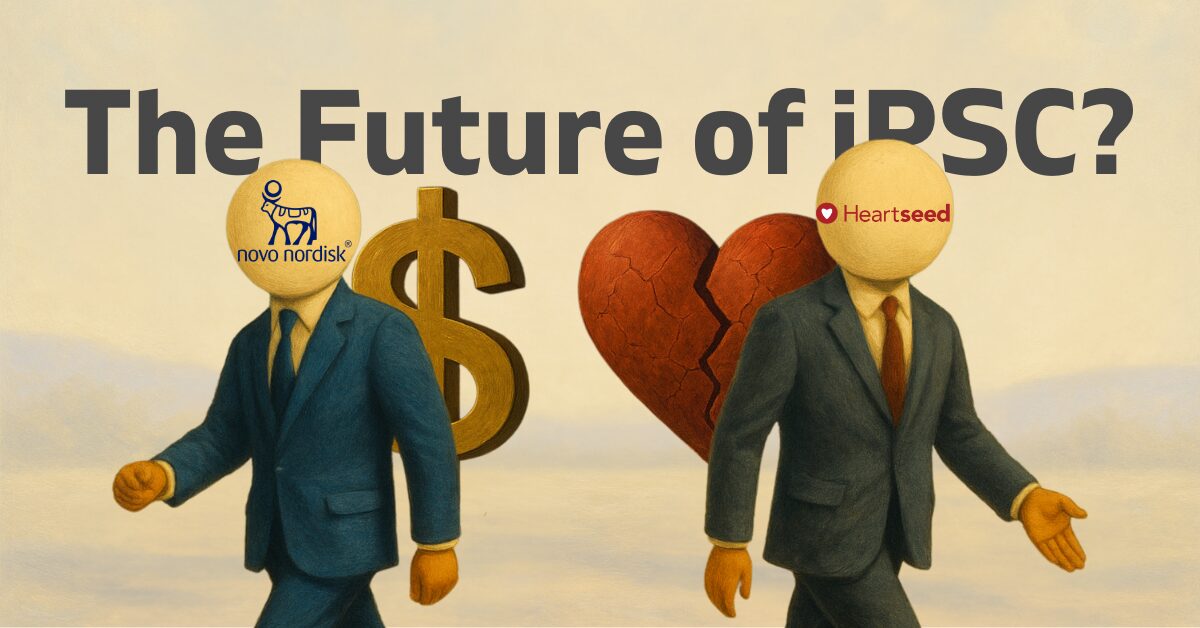
Sadly, Novo Nordisk has ended its $598 million collaboration with Tokyo-based biotech Heartseed, marking a major shift in its approach to regenerative medicine and iPSCs, specifically. The cancelled partnership, originally launched in 2021, was focused on developing an allogeneic induced pluripotent stem cell (iPSC)-derived therapy for heart failure called “HS-001”.

Novo’s decision to terminate the deal, announced by Heartseed in a securities filing this week, was attributed to “strategic reviews and business shifts” under the company’s new CEO, Mike Doustdar. The move ends a four-year partnership that once represented a bold leap into regenerative medicine for Novo Nordisk.
First Takeda, Now Novo Nordisk: Pharma Giants Drops Cell Therapy
The Danish pharma giant initially invested $55 million in upfront and near-term payments and had pledged up to $540 million in milestones to advance Heartseed’s lead asset, HS-001. The therapy uses iPSC-derived cardiomyocyte spheroids (tiny heart cell clusters) to regenerate damaged tissue and restore cardiac function in patients with heart failure.
Now, Novo Nordisk is eliminating 250 positions, and worse yet, closing a massive $1.3 billion R&D unit that was once focused on developing treatments for chronic and critical conditions, like Type 1 diabetes and Parkinson’s.
With the termination, all intellectual property rights related to HS-001 will revert to Heartseed. The biotech has stated it will now “explore options including partnerships” for overseas development while continuing its clinical trials in Japan. Heartseed emphasized that it has sufficient resources to advance its Phase 1/2 LAPiS study using its existing funds.
Novo Nordisk’s withdrawal comes on the heels of similar decisions by other pharmaceutical giants to scale back or exit large-scale iPSC therapy programs. In other disappointing news, Takeda, another major player in regenerative medicine, also recently pulled back from its own iPSC initiatives. Together, these moves reflect a growing hesitation among big pharma to commit to long-term, high-cost regenerative programs that face uncertain timelines for profitability.
For Novo Nordisk, the pivot fits squarely within CEO, Mike Doustdar’s, broader restructuring strategy. Since assuming the CEO role in May, following the departure of Lars Fruergaard Jørgensen, Doustdar has moved quickly to streamline operations and focus on the company’s most profitable businesses areas. That means doubling down on Novo’s powerhouse diabetes and obesity franchises, therapeutic areas fueled by runaway demand for GLP-1 drugs such as Ozempic and Wegovy.
“We need to reallocate and look at our cost base and really put the money where the growth is,” Doustdar told investors during Novo’s Q2 earnings call. The company has since announced a global workforce reduction of 9,000 employees as part of its cost-cutting drive. Analysts at BMO Capital Markets called the strategy “decisive and refocused,” noting that it could help the company regain its footing after a 35% stock decline this year.
A Setback…or a Catalyst?
At first glance, Novo’s exit (and Takeda’s before it) might appear to represent a setback for iPSC-based regenerative medicine. These therapies, still in early stages of clinical testing, hold immense promise for repairing or replacing damaged tissues, but they also face high production costs, complex regulatory hurdles, and long development timelines.
When major pharmaceutical companies step away, it can seem as though confidence in the field is faltering. Yet, viewed differently, this may be a pivotal moment, one that shifts momentum from the world’s largest corporations to the innovators willing to forge new, independent paths forward.
As big pharma retreats to safer and more predictable markets, startups like Heartseed are stepping into the gap, armed with scientific conviction and a commitment to long-term impact over short-term gains.
Heartseed’s CEO, Dr. Keiichi Fukuda, has dedicated decades to developing iPSC-derived cardiomyocytes capable of repairing the human heart. Founded in 2015, Heartseed has since raised over 10.2 billion JPY (approximately $74 million USD), including a 2 billion JPY Series D round earlier this year. The company plans to complete its ongoing clinical trial in Japan and eventually bring its therapy to market domestically before pursuing new global partnerships.
“Our goal is to make regenerative therapy for heart failure a common treatment that anyone can access—not a rare or exclusive option,” said Heartseed’s CEO, Dr. Fukuda. “We remain committed to realizing that vision.”
The Road Ahead for iPSC Therapies
While large pharmaceutical companies may be pausing their bets on iPSC therapies, innovation in regenerative medicine is far from slowing down. On the contrary, it may now depend more than ever on agile, independent biotechs with the courage to experiment and the patience to endure.
True progress in this field will come from those who build where the giants pull back, from startups willing to navigate uncharted ground and redefine what’s possible for cell-based science and sustainability.
Novo Nordisk’s decision may mark the end of one chapter for Heartseed, but it also highlights the beginning of another: a chance for smaller, mission-driven players to lead the next phase of regenerative medicine. As the pharmaceutical landscape shifts, it’s the innovators who persist, quietly and relentlessly, who will determine the future of this transformative field.
 Or, explore the full
Tell Us What You Think!