Because exosomes are being explored for a diverse range of therapeutic applications, it is critical to optimize exosome isolation methods for maximum yield, purity, and reproducibility. Beyond the classical ultracentrifugation method, there are now several commercial exosome isolation kits developed around specific principles, such as charge neutralization-based precipitation, gel-filtration, and affinity purification using magnetic beads, that are available in the global market.
Comparative studies of these methods show similarities and differences in yield, purity, and integrity of the isolated exosomes. Dozens of leading research product vendors—including multinational companies like Lonza and Thermo Fisher Scientific—are actively developing and expanding product lines to facilitate exosome-related research.
Exosome Isolation Techniques
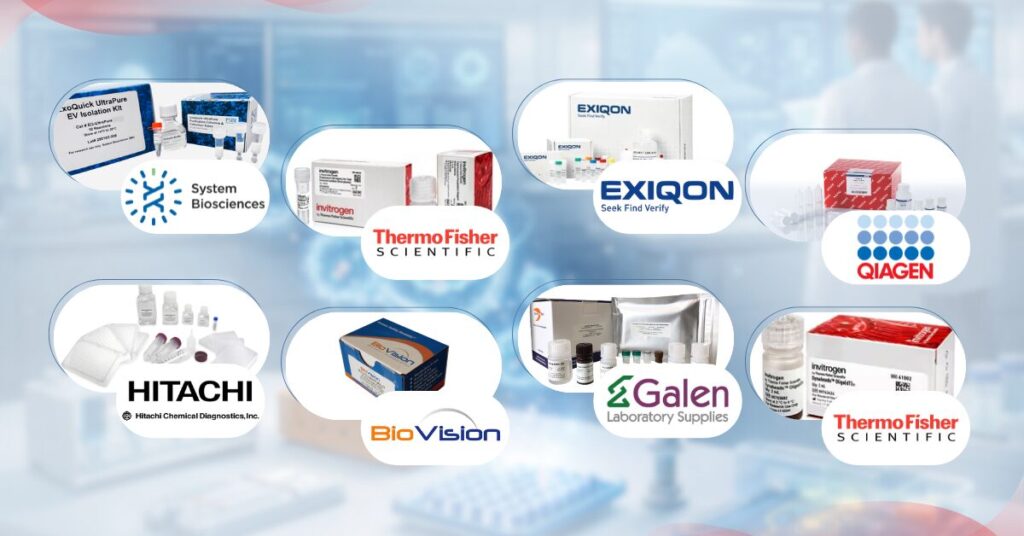
Although ultracentrifugation is the most commonly used technique, it is not well suited for large-scale clinical trials. Therefore, researchers often use commercially available products, such as:
- ExoQuick (System Biosciences)
- TEI Total Exosome Isolation Reagent (Thermo Fisher Scientific)
- miRCURY (EXIQON)
- exoEasy (QIAGEN)
- Exocomplete Filterplate (Hitachi Chemical Diagnostics, Inc.)
- ExoPure (BioVision, Inc.)
- ExoTest (Galen Laboratory Supplies)
- DynaBeads (Thermo Fisher Scientific)
Understandably, there is not yet a specific exosome separation technique suitable for every study or one that has been widely accepted. Ideally, a standardized method for the separation of exosomes from human samples will be developed soon, which could facilitate the development of novel applications for exosomes.
After their isolation, captured exosomes are characterized and quantified using various research tools. These tools include Western Blotting for characterization, qPCR for miRNA profiling, NGS for miRNA/sRNA studies, Microarray for miRNA profiling, and qPCR for mRNA mutation detection. Western blotting is a reliable, low-cost, and convenient method to identify and quantify specific proteins on the exosome membrane. Because there are no specific exosome markers, the proteins present on exosome membrane serve as markers.
In the recent past, biomarker discovery based on extracellular exosome miRNAs gained attention. Although next-generation sequencing (NGS), microarray and digital PCR have been in use as effective downstream analytical platforms for exosome miRNA quantification, they are rather constrained in clinical utility compared with RT-qPCR method at present.
Next-generation sequencing (NGS) is also used for the sequencing of miRNAs to identify disease biomarkers. Several companies are now offering exosome characterization and quantification services using biofluids and tissue culture supernatants. These companies include Anjarium Biosciences, Aposcience AG, Capricor Therapeutics, Codiak BioSciences, Evox Therapeutics, ExoCyte Therapeutics, Kimera Labs and ZenBio. Often, these companies also offer mutation detection and miRNA profiling services.
In recent years, researchers have been increasingly using different products and techniques to isolate, modify, characterize, and quantify exosomes sourced from body fluids such as blood, urine, cerebrospinal fluid, breast milk and stem cells. This is understandable, given that there are now an astounding 63,364 scientific papers published about exosomes and extracellular vesicles on PubMed.gov. PubMed is an online database maintained by the U.S. National Library of Medicine that provides access to vast numbers of abstracts and articles globally. Based on our current estimates, it likely indexes at least two-thirds of the world’s peer-reviewed scientific literature.
To learn more about this rapidly expanding market area, view the “The Global Exosome Market – Market Size, Forecast, Trials and Trends.”