

Legislation would authorize $280 million over 5 years to support National Cord Blood and Bone Marrow Transplant Programs.
A bipartisan group of lawmakers in the U.S. House has introduced new legislation to extend funding for two cornerstone programs that connect patients with life-saving stem cell treatments. The Stem Cell Therapeutic and Research Reauthorization Act of 2025 proposes more than $280 million in federal funding over the next five years, ensuring that these initiatives continue past their current 2026 expiration date.
Key to the legislation are two federally backed programs:
-
The C.W. Bill Young Cell Transplantation Program, which would receive funding of $33 million annually. This program maintains a national registry of volunteer bone marrow donors and provides matches for patients in need.
-
The National Cord Blood Inventory (NCBI), which would be funded at a rate of $23 million annually. The NCBI builds and manages a diverse inventory of cord blood units collected from public donations after live births.
Together, these programs serve as critical support for patients battling leukemia, lymphoma, sickle cell anemia, and dozens of other blood-related cancers and illnesses. Since their inception in 2005, these efforts have enabled tens of thousands of successful transplants. For many patients who lack a viable family donor, these registries often represent the only path to treatment.
Lawmakers leading the charge, such as Representatives Gus Bilirakis (R-FL), Chris Smith (R-NJ), Doris Matsui (D-CA), Chellie Pingree (D-ME), Claudia Tenney (R-NY), and Kweisi Mfume (D-MD), emphasized both the medical and moral importance of reauthorization this federal funding. They spoke about how adult stem cell research, conducted under rigorous ethical standards, continues to unlock new treatments while offering hope to patients.
Stem Cell Therapeutic and Research Reauthorization Act of 2025
The science behind bone marrow and cord blood transplantation has advanced rapidly in recent decades. Once considered experimental, stem cells derived from umbilical cord blood (which used to be discarded as medical waste), are now recognized as a valuable therapeutic asset. Today, these cells are used in treating a diverse range of diseases. They are also being studied for potential applications in conditions that include Alzheimer’s disease, heart disease, cancer, metabolic diseases, and beyond.
Advocates also highlight the importance of maintaining a strong and diverse donor pool for cord blood and bone marrow transplants. For patients who come from underrepresented ethnic backgrounds, finding a genetic match can be unlikely. Expanding national registries is a way to ensure equitable access to lifesaving therapies.
Organizations like the National Marrow Donor Program (NMDP) and the Cord Blood Association (CBA) have supported the legislation, noting that it strengthens networks of public cord blood banks and ensures that patients can access high-quality units when family matches aren’t available.
Amy Ronneberg, CEO of NMDP, stated that continued federal support “demonstrates how a deepening commitment to saving lives can impact over 140,000 patients’ lives to date and create an enduring program to serve all patients in need.” Dr. Joanne Kurtzberg, President of the CBA, echoed that sentiment, describing the NCBI as “a wonderful example of how public support can increase access to healthcare for patients with unmet medical needs.”
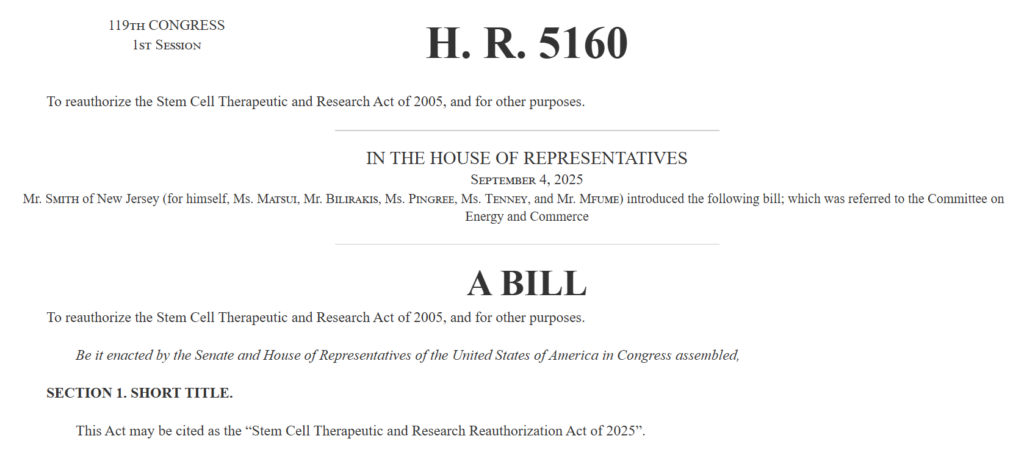
Caption: Click here to view the full bill.
With bipartisan backing and a proven track record of success, the Stem Cell Therapeutic and Research Reauthorization Act of 2025 is expected to gain support. If passed, it will not only extend critical government funding but also reaffirm a nationwide commitment to advancing medical research and ensure that a broader and more diverse base of patients have access to lifesaving treatments.
Read the original Press Release here.