
The regenerative medicine sector is increasingly exploring alternatives to traditional cell-based therapies, with growing interest in cell-free biologics. This shift reflects an effort to harness the signaling properties of stem cells while avoiding some of the regulatory, logistical, and biological complexities associated with live-cell interventions. Within dermatology and aesthetic medicine, one emerging area of investigation is hair restoration.
Exosomes, nanoscale extracellular vesicles involved in intercellular communication, are being studied for their potential to influence follicular biology without introducing viable cells. A number of hair restoration clinics have begun offering exosome-based products, either as standalone treatments or as adjuncts to established procedures, although clinical protocols and product composition vary widely.
Biological Basis: Extracellular Vesicles and Follicular Signaling
Exosomes are membrane-bound vesicles, typically 30–150 nanometers in diameter, secreted by many cell types, including mesenchymal stromal cells. They contain a range of bioactive molecules, including proteins, lipids, messenger RNA, and microRNA, which can influence recipient cell behavior through paracrine signaling.
In the context of hair biology, researchers are investigating how extracellular vesicle–mediated signaling may affect the hair growth cycle. Conditions such as androgenetic alopecia are characterized in part by follicular miniaturization and dysregulation of the normal cycling process between the anagen (growth), catagen (transition), and telogen (resting) phases.
Preclinical studies and early clinical observations suggest that signaling molecules associated with extracellular vesicles may play a role in modulating dermal papilla cell activity, local inflammation, and vascularization. These mechanisms have led to the hypothesis that such therapies could help support a transition of follicles into the anagen phase. However, these effects have not yet been conclusively demonstrated in large, well-controlled human trials.
This therapeutic rationale aligns with a broader trend in regenerative medicine, where paracrine signaling, rather than direct cell engraftment, is thought to play a significant role in tissue repair processes. To understand how this rationale is being applied in practice, we spoke with clinicians at Natural Transplants, a hair restoration practice currently utilizing these cell-free biologics.
“We are observing a shift in how follicular regeneration is approached,” noted Dr. Matt Huebner, Chief Medical Director at Natural Transplants. “By focusing on cell-derived vesicles rather than whole cells, it becomes possible to deliver signaling factors that influence the follicular environment without introducing the variability associated with live-cell therapies.”
Sourcing, Processing, and Safety Considerations
As with any biologic intervention, the clinical characteristics of exosome-based products depend heavily on sourcing and manufacturing methods. Variability in donor material, isolation techniques, and purification processes can significantly influence the composition, purity, and reproducibility of the final product.
Some commercially available products are derived from perinatal tissues such as Wharton’s Jelly, a component of the umbilical cord often described as rich in mesenchymal-associated signaling factors. However, the degree to which these products contain well-characterized, functional extracellular vesicles, and in what concentrations, remains an area of ongoing scrutiny within the exosome manufacturing industry.
Because exosomes are acellular and lack replicative capacity, they are often described as having a lower theoretical risk of immune rejection or tumor formation compared to live stem cell therapies. That said, comprehensive safety data in large patient populations are still limited, and questions around standardization and quality control remain central to ongoing research and regulatory evaluation.
Clinical Integration: From Non-Surgical Use to Surgical Adjunct
In clinical settings, exosome-based therapies are currently used in two primary ways, though approaches vary and are not standardized.
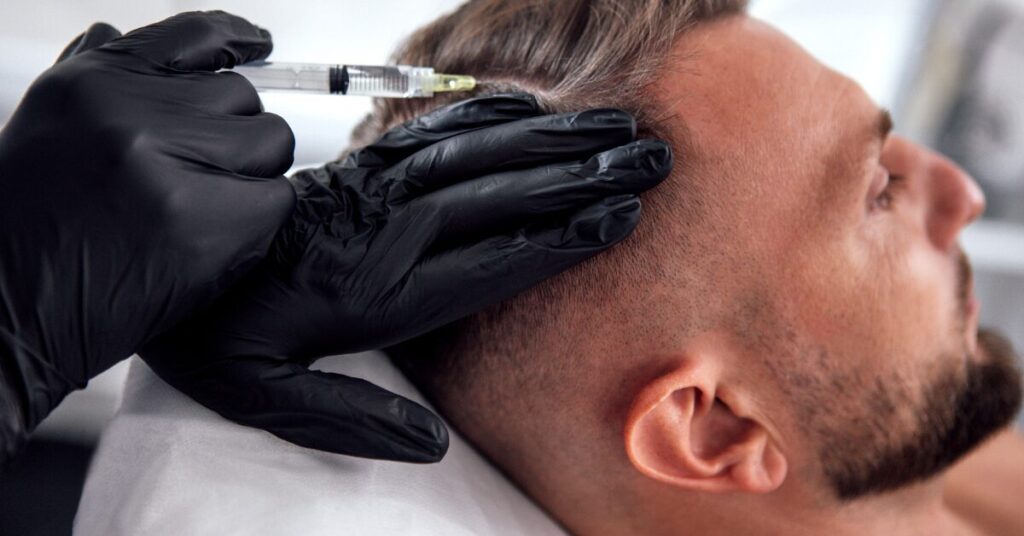
The first is as a non-surgical intervention for individuals with early-stage hair thinning, where the goal is to potentially support follicular function. These treatments typically involve localized scalp injections administered over a series of sessions, followed by maintenance treatments. Evidence supporting efficacy in this setting remains limited and heterogeneous.
The second application is as an adjunct to established surgical techniques such as follicular unit extraction (FUE) and follicular unit transplantation (FUT). In this context, exosome-based products are proposed to support wound healing and potentially improve the local environment for graft survival, in part through immunomodulatory signaling effects.
“Inflammation plays a role in both hair loss progression and post-surgical recovery,” explained Dr. Kevin Blumenthal, a hair restoration surgeon at Natural Transplants. “The signaling molecules contained in these vesicles appear to have immunomodulatory effects that may help create a more favorable environment for graft survival, while also supporting healing in both donor and recipient areas.”
However, controlled comparative studies evaluating long-term outcomes such as graft retention, healing time, and permanent hair density are still lacking.
Regulatory Landscape and Evidence Gaps
From a regulatory perspective, exosome-based therapies occupy a complex and evolving space. In the United States, such products are generally regulated under the Federal Food, Drug, and Cosmetic Act. At present, there are no exosome therapies approved by the U.S. Food and Drug Administration specifically for hair restoration.
This reflects a broader pattern within the field: clinical interest and commercial availability have advanced more rapidly than the supporting evidence base. Larger, well-designed randomized controlled trials will be necessary to determine efficacy, establish optimal dosing strategies, and better characterize long-term safety.
Outlook: A Field in Transition
The growing interest in exosome-based approaches to hair restoration reflects a wider shift within regenerative medicine toward isolating and delivering the signaling components involved in tissue repair. If supported by rigorous clinical evidence, such strategies could represent a more standardized and scalable alternative to traditional cell-based therapies.
At present, however, the field remains in transition. Key questions related to product characterization, manufacturing consistency, regulatory classification, and clinical effectiveness have yet to be fully resolved. As a result, exosome-based interventions in hair restoration should be understood as investigational, situated between early clinical adoption and the ongoing process of evidence-based validation.
Key Takeaways
- The Shift to Cell-Free Biologics: Regenerative medicine is increasingly exploring cell-free approaches that aim to replicate aspects of stem cell signaling without the use of viable cells.
- Mechanism of Action (Proposed): Exosomes mediate intercellular signaling through the transfer of bioactive molecules. Their role in hair follicle cycling remains under investigation and is not yet clinically established.
- Clinical Use (Emerging, Not Standardized): Exosome-based therapies are being used both as standalone treatments and as adjuncts to hair transplant procedures, though protocols and outcomes vary.
- Safety Profile (Theoretical Advantages, Limited Data): Acellular products may present lower theoretical risks than live-cell therapies, but robust long-term safety data are still needed.
Regulatory Status: No exosome-based therapy is currently FDA-approved for hair restoration, and further clinical research is required to validate efficacy and standardize treatment approaches