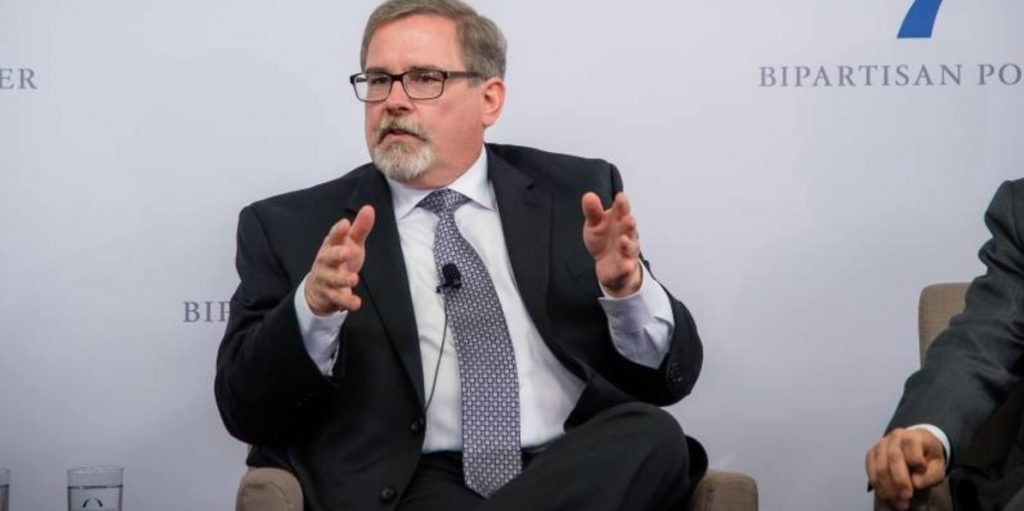
Doug Oliver advised Congress on 21st Century Cures Act, leads foundation’s growing network of experts to help clinics pursue FDA approval
“I love what you’re doing and remember those early fateful days where I got you together with Senator Alexander … You reached out to me early on, and with that we’re helping hundreds of thousands, and eventually millions of people through your hard work.”
– Former U.S. Senate Majority Leader Bill Frist, M.D.
NASHVILLE — The Regenerative Outcomes Foundation today announced that the nonprofit will help stem cell researchers and clinicians along the path toward FDA approval of their drugs and therapies through the new Regenerative Medicine Advanced Therapy (“RMAT”) fast-track approval designation established by the 21st Century Cures Act. Founder and Director Doug Oliver, whose own eyesight was restored through stem-cell therapy, helped develop the new law, and believes the foundation is uniquely positioned to help speed innovative, safe, an effective regenerative medicine therapies to market by becoming part of the solution to the problem of a growing number of stem cell-based therapies being offered in the U.S. without approval by FDA of their safety and effectiveness.
Oliver and the other founding members established the foundation with the three-fold mission to help:
1. Educate and guide cell therapy providers who desire to engage the new FDA application process, achieve compliance, and test their therapies, helping them along the way with critical ethics issues like advertising, informed consent, patient engagement, and continuum-of-care concerns
2. Provide grants to patients to offset cost of ancillary services and other hidden expenses associated with entering clinical trials
3. Advance behavioral research and specialized counseling to better understand and help patients adjust to their treatment outcomes
 “We’re entering an astonishing age of medicine in which we’re learning how to use the cells from our own bodies to treat and cure diseases,” Oliver said. “My own adult stem cells restored my vision, but therapies like mine need more testing to assure their safety and prove their effectiveness. Patients have been called ‘the North Star,’ the most fitting guides to first encourage these therapies and the providers that administer them toward regulatory approval, and then help create the avenues to access them. Who better than patients to maximize the reach of safe, effective cellular therapies while at the same time helping to minimize the American public’s exposure to bad actors in the regenerative medicine arena? I had this in mind when I helped write the law. I’m excited about our growing network of experts and scientists who will help us provide specific consultative services that will assist others to directly advance the 21st century’s cures.”
Oliver expects that the foundation will also forge new ways of collaborating with patient experts, federal and state policymakers, researchers, providers, and industry to build the bridges necessary for securing and stabilizing access for patients to the medical innovations evolving at a feverish pace.
As that bridge-building expands, sponsors and clinics can leverage partners offering patient advocacy outreach services to connect with verified rare-disease communities, co-create compliant messaging, and rapidly gather insights and participants for RMAT-enabling studies—improving ethical recruitment, diversity, and real-world feedback across interviews, surveys, and trials.
“I love what you’re doing and remember those early fateful days where I got you together with Senator Alexander,” said former U.S. Senate Majority Leader Bill Frist, M.D., in an interview earlier this year with Oliver for the foundation’s “Pioneers of Hope” series.
Both Frist and Oliver worked on the 21st Century Cures Act legislation, signed into law in Dec. 2016 to make it easier for safe, effective drugs and devices to gain FDA approval.
Oliver says it all started when in August 2015 Oliver became a stem-cell patient himself. At age 32, he was diagnosed with macular degeneration. He became legally blind at age 45. In 2015, after undergoing autologous bone-marrow stem- cell therapy, he regained much of his lost vision. He received his driver’s license five months later.
Doug’s story has reached many through international broadcasts, interviews with national press, and countless affiliate television and news media outlets. In 2015, press coverage caught the attention of Tennessee’s senior U.S. Sen. Lamar Alexander, chairman of the Senate’s health committee, and Dr. Frist, who engaged him in helping to craft key patient provisions in the 21st Century Cures Act.
He was invited to Washington, D.C., to hold meetings with key U.S. senators and representatives from both sides of the aisle, with the goal of galvanizing efforts to boost funding and initiate regulatory reform.
The Cures Act, which passed with record bipartisan support in December 2016, provides a foundation to markedly accelerate the access of many patients to cellular therapies like the one he received.
Source: Regenerative Outcomes Foundation